This guide explains how to recreate automation workflows from your previous email platform in Sender's automation builder. It assumes you have already completed your initial subscriber import and domain verification.
Before You Start
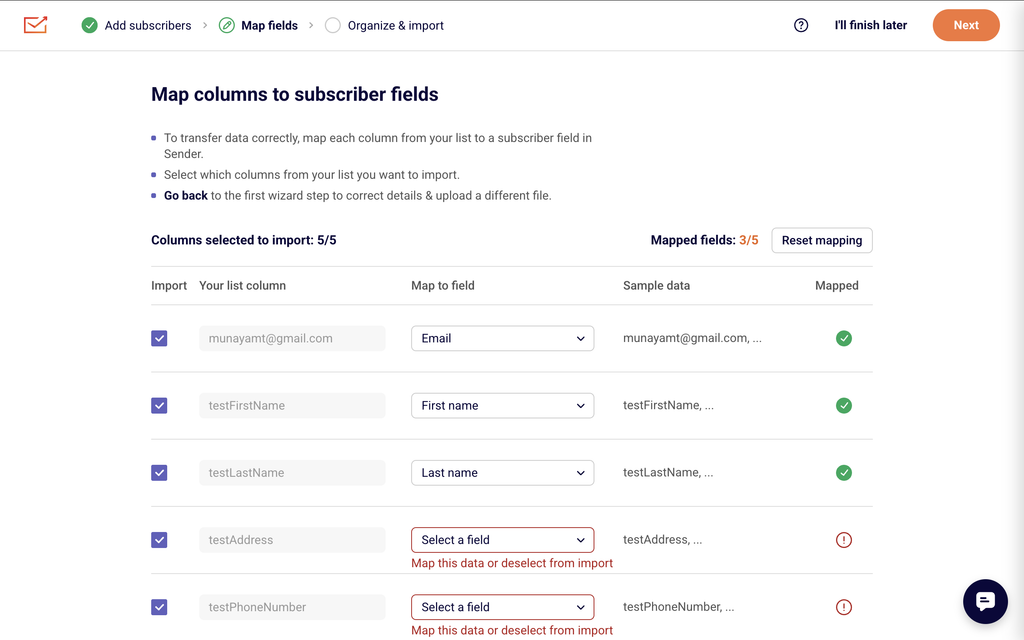
- Completed subscriber import in Sender
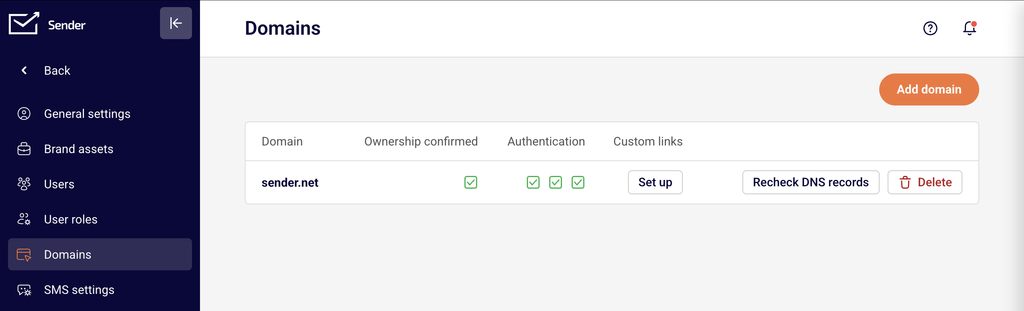
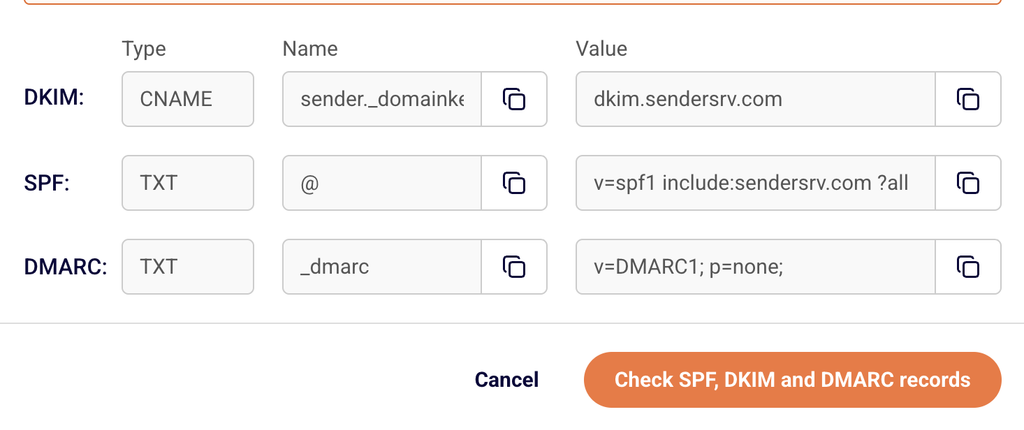
- Verified sending domain in Sender
- Admin access to your source platform to audit automation workflows, including the ability to view triggers, steps, conditions, and email content
- A documented list of every active automation you plan to recreate, including trigger type, sequence of steps, delay durations, branching logic, and the email or SMS content used in each step
- Any custom fields or subscriber groups already created in Sender that your automations will reference
Audit Your Source Platform
Automation triggers — For each automation, record which event starts the workflow (e.g., subscriber added to a list, tag applied, date-based trigger, purchase event). Note the specific list, tag, or field the trigger references. You will map each trigger to one of Sender's trigger types, such as Subscriber joins a group, A date, A cart is abandoned, or Custom event is triggered.
Workflow steps and sequence — Document every step in order: emails, SMS messages, delays, conditions, and actions. For each email or SMS step, record the subject line, sender name, and content. For delays, record the exact wait time (e.g., 1 hour, 3 days). This sequence will be rebuilt step by step in Sender's automation builder using Email, SMS, Delay, Condition, Action, and Split steps.
Conditional branching logic — Record every if/then branch and the criteria used (e.g., opened previous email, clicked a link, belongs to a segment, has a specific custom field value). In Sender, conditions split into Yes and No paths and support types including Subscriber details, Workflow email activity, Campaign activity, Group membership, and Segments.
Actions and list management steps — Note any steps that add or remove tags, move subscribers between lists, update fields, or unsubscribe contacts. In Sender, these translate to Action steps such as Move subscriber to another group, Copy subscriber to another group, Update subscriber's custom field, or Mark subscriber as unsubscribed.
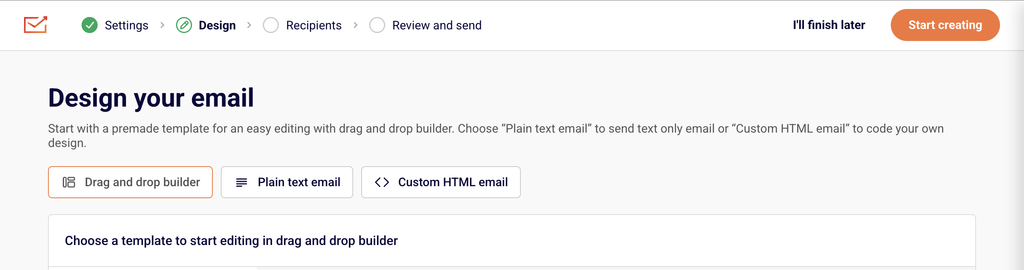
Email and SMS content — Save or export the HTML of each email used in automations. If your source platform does not support HTML export, copy the text content, subject lines, and note the layout structure. You will rebuild these using Sender's drag-and-drop editor or by importing HTML into an Email step.
Steps to Recreate Automations in Sender
Step 1 — Map your source platform trigger to a Sender trigger
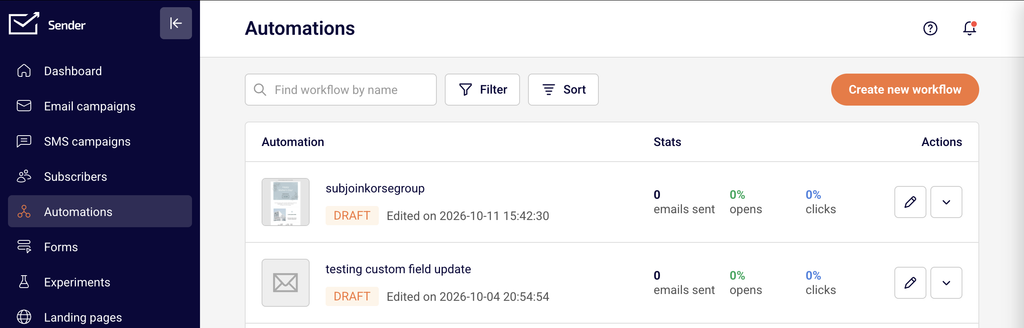
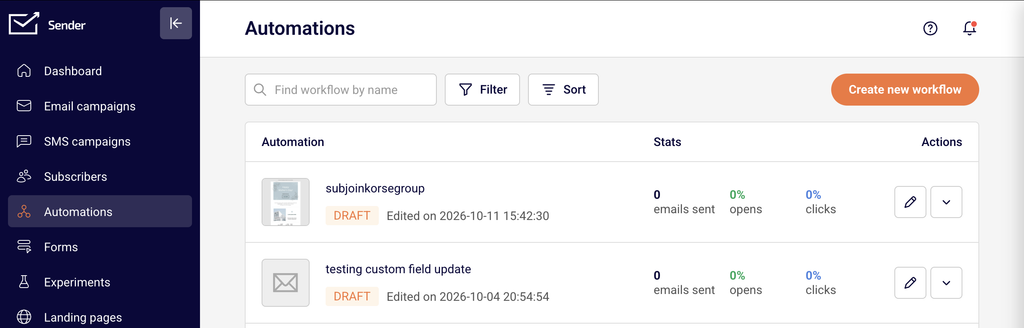
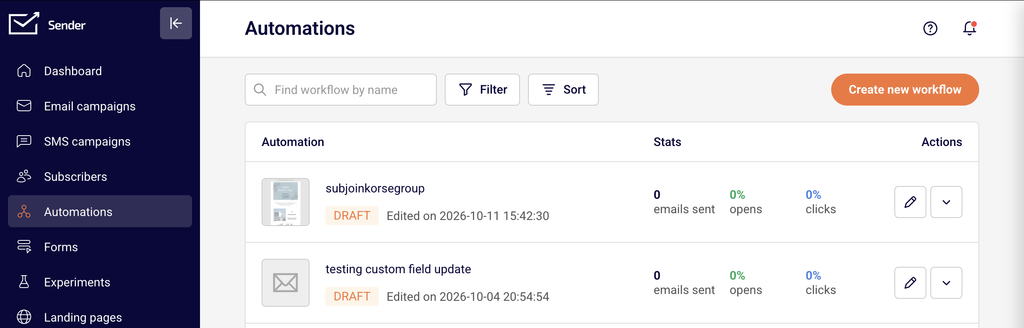
Open your documented automation and identify the original trigger event. In Sender, go to Automations → Create new workflow → Create from scratch. Select the trigger that matches your original workflow from the available options: A date, An anniversary of a date, Subscriber joins a group, Subscriber is removed from a group, A link is clicked, A cart is abandoned, A product is purchased, An order is fulfilled, Subscriber unsubscribed, Subscriber field updated, or Custom event is triggered. Name your workflow, then configure the trigger settings in the Trigger Setup panel on the right. If your source trigger was list-based, select the corresponding Sender group under Select Group.
Step 2 — Rebuild each step in the automation sequence
Click the + icon below the trigger to open the Add a new step panel. Add each step in the same order as your source automation. For email steps, select Email and build or paste your content. For wait times, select Delay and set the duration. For conditional branches, select Condition, choose the condition type (such as Workflow email activity or Subscriber details), and configure the Yes and No paths. For subscriber management actions, select Action and choose the appropriate option (such as Copy subscriber to another group or Update subscriber's custom field). For A/B path testing, use the Split step. Repeat until all steps from your source workflow are added.
Step 3 — Configure step details and connect email content
Click on each step in the workflow canvas to open its setup panel on the right. For Email steps, design your email using the drag-and-drop editor or import the HTML you saved during the audit. For Condition steps, define the exact rules that match your source platform's branching logic — select the condition type and configure the matching criteria. For Action steps, select the target group or custom field. For Delay steps, set the exact duration from your documentation. Verify the Completion counter in the top-right corner to ensure all steps are fully configured before activating.
Step 4 — Review, test, and activate the workflow
Before activating, review the entire workflow on the canvas to confirm the step order, branching paths, and content match your source automation. Add a test subscriber to the trigger group (or trigger the workflow manually with a test contact) and verify that each step executes correctly. Check that emails arrive with the expected content, delays fire at the right intervals, and conditions route the subscriber to the correct branch. Once testing is complete, set the workflow status from Draft to active.
Mapping Reference
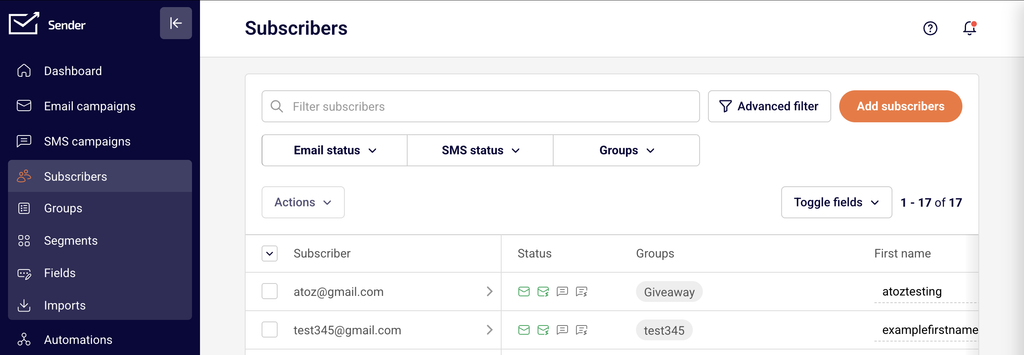
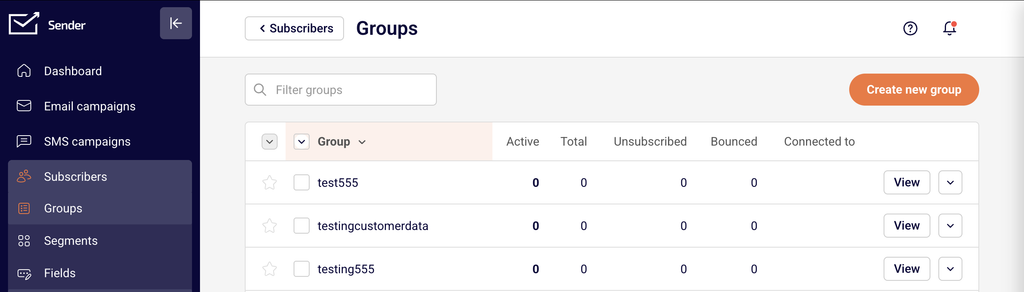
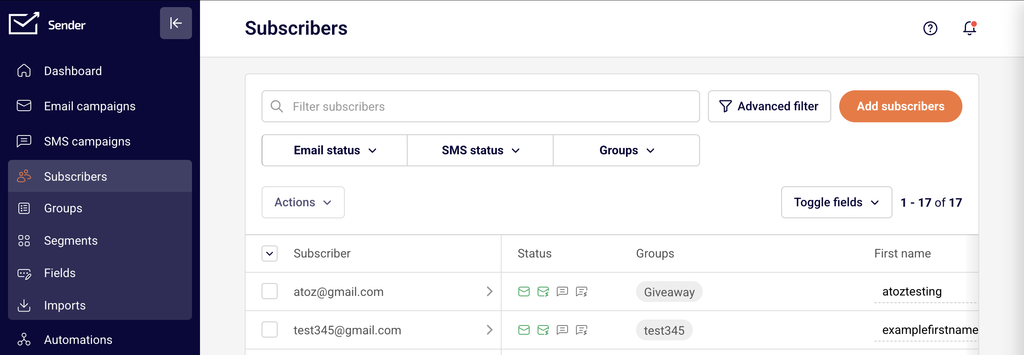
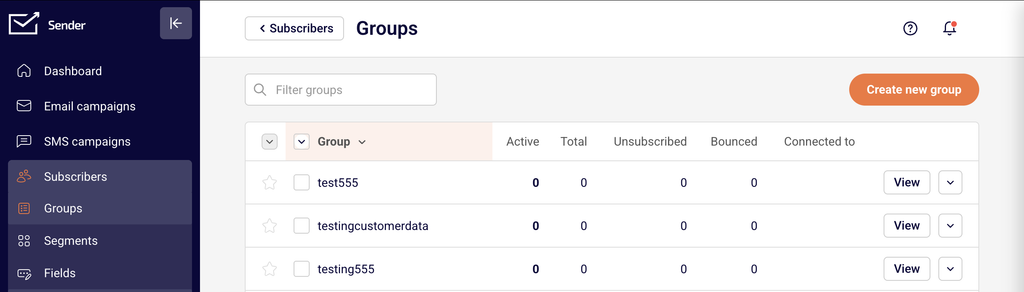
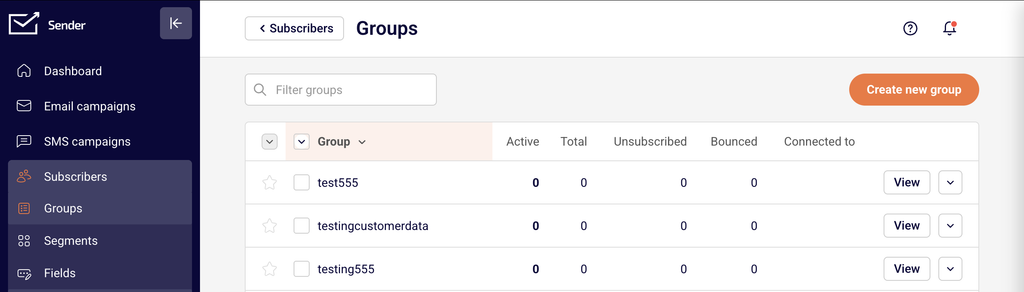
List/audience-based triggers → Subscriber joins a group — If your source automation triggers when a subscriber is added to a list or audience, use the Subscriber joins a group trigger in Sender and select the equivalent group. Create the group under Subscribers → Groups → Create new group before building the automation.
Tag-applied triggers → Subscriber joins a group or Subscriber field updated — If your source automation triggers when a tag is applied, map that tag to a Sender group and use Subscriber joins a group. Alternatively, if you store tag data as a custom field, use Subscriber field updated as the trigger.
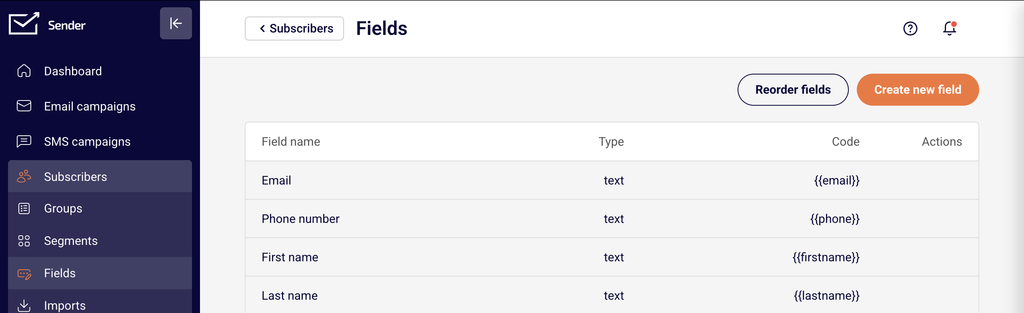
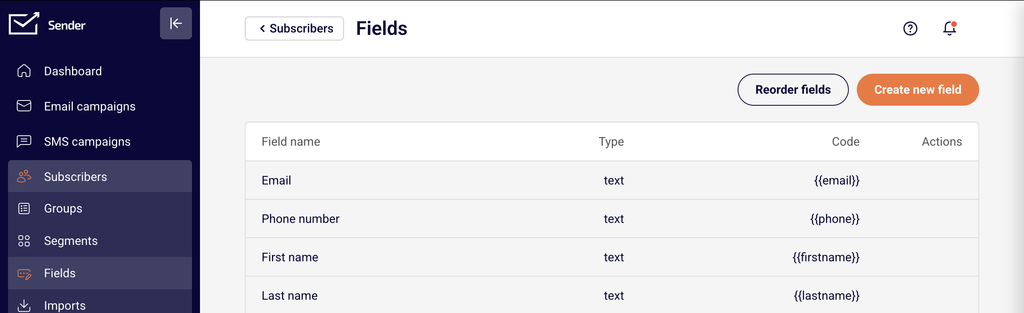
Date-based and anniversary triggers → A date / An anniversary of a date — If your source automation triggers on a subscriber's date field (e.g., signup date, birthday), use A date for one-time triggers or An anniversary of a date for recurring annual triggers. The subscriber must have a date-type custom field configured in Subscribers → Fields.
If/then conditional branches → Condition step — Source platform conditions such as "opened email," "clicked link," or "is in segment" map to Sender's Condition step. Select the relevant condition type: Workflow email activity for open/click behavior within the automation, Campaign activity for engagement with standalone campaigns, Group membership for list-based filtering, or Subscriber details for custom field values.
Wait/delay steps → Delay step — Time delays between steps in your source platform translate directly to the Delay step in Sender. Set the same duration (minutes, hours, or days) you documented during the audit.
Add/remove tag actions → Action step (group or custom field operations) — Source platform actions that add or remove tags translate to Move subscriber to another group, Copy subscriber to another group, Remove subscriber from group, or Update subscriber's custom field in Sender's Action step.
Unsubscribe actions → Action step (Mark subscriber as unsubscribed) — If your source automation includes a step that unsubscribes a contact, use the Mark subscriber as unsubscribed action in Sender.
Webhook or API call actions → Action step (Send webhook) — If your source automation sends data to an external system via webhook, use the Send webhook action in Sender and configure the endpoint URL.
What Cannot Be Migrated Automatically
Automation workflow structure — No platform supports exporting automation workflows as importable files. You must manually recreate each workflow's trigger, steps, conditions, and content in Sender's automation builder using the documentation from your audit.
Email engagement history within automations — Open rates, click rates, and completion rates from your source platform's automations do not transfer. Performance tracking in Sender starts fresh from the first send of each recreated automation.
Platform-specific trigger types — Some source platforms offer triggers that have no direct equivalent in Sender (e.g., lead scoring thresholds, page visit tracking, or app-specific events). Review Sender's trigger list and consider using Custom event is triggered with an API integration, or restructure the automation to use an available trigger.
Complex multi-condition branching — If your source automation uses nested conditions or multiple simultaneous condition checks that exceed Sender's single Condition step with Yes/No branching, you will need to split the logic across multiple automations or use sequential condition steps to replicate the filtering.
Internal notification and CRM actions — Source platform actions that create tasks in a CRM, update deal stages, or trigger third-party app workflows cannot be directly recreated. Use the Send webhook action or the Notify me action to approximate these, or connect Sender to your CRM through an integration tool.
How to Test the Migration
Trigger test — Add a test subscriber to the group that triggers the automation (or fire the relevant event for non-group triggers). A successful result is the test subscriber entering the workflow and appearing in the automation's activity log.
Email delivery test — Verify that each email step sends the correct content with the expected subject line, sender name, and formatting. Check the test subscriber's inbox for every email in the sequence and confirm links, images, and personalization fields render correctly.
Delay timing test — For short delays, observe that the next step fires after the configured wait time. For longer delays (e.g., days), set temporary shorter delays during testing, then reset to the correct duration before activating for your full audience.
Condition routing test — Trigger the automation with test subscribers who meet and do not meet each condition's criteria. Verify that subscribers following the Yes path and the No path each receive the correct subsequent steps.
Action step verification — After the automation runs, check that action steps executed correctly: confirm group membership changes under Subscribers → Groups, custom field updates under Subscribers → Fields, and unsubscribe status changes in the subscriber's profile.
Migration Tips
Prioritize active, high-impact automations — Start with welcome sequences, cart abandonment, and re-engagement workflows. Migrate inactive or low-priority automations later, or consolidate redundant workflows.
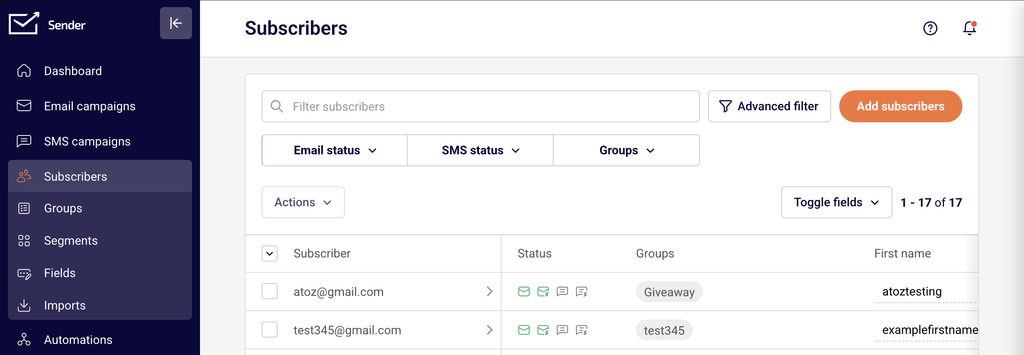
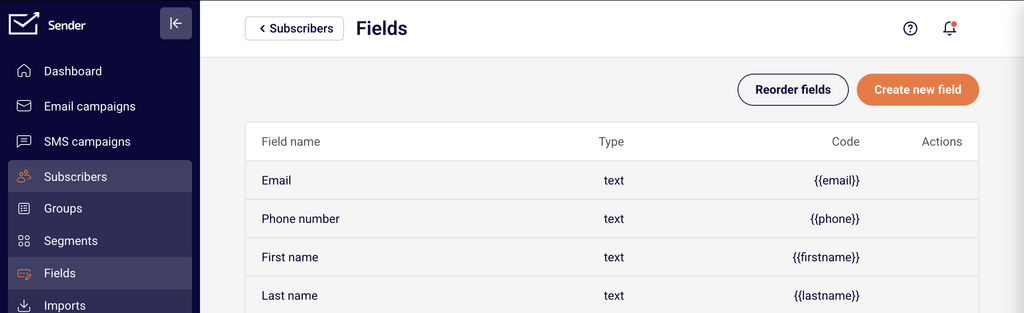
Recreate groups and custom fields first — Before building automations, create all the subscriber groups and custom fields that your workflows will reference. This prevents interruptions during the build process. Go to Subscribers → Groups → Create new group and Subscribers → Fields → Create new field to set these up in advance.
Use descriptive workflow and step names — Name each workflow and each step clearly (e.g., "Welcome Series — Email 2: Feature Overview") so the automation is easy to audit and troubleshoot later. Use the Trigger Title, Condition Title, and Action Title fields in each step's setup panel.
Keep your source platform active during migration — Do not deactivate source platform automations until the equivalent Sender automations are fully tested and live. This prevents gaps in subscriber communication during the transition.
Document differences between platforms — If a source automation required restructuring to fit Sender's available triggers, conditions, or actions, note what changed. This record helps with future troubleshooting and onboarding new team members.
Common Issues
Automation does not trigger → The selected group may not match the group subscribers are being imported into, or the trigger has not been saved. Click the trigger step on the canvas, verify the correct group is selected under Select Group in the Trigger Setup panel, and click Save.
Condition step routes all subscribers to one path → The condition type or criteria may not match subscriber data. Open the Condition Setup panel, verify the selected condition type (e.g., Subscriber details, Group membership), and confirm that the subscriber data in Sender contains the values the condition is evaluating.
Emails in automation show broken formatting → Imported HTML may contain CSS or elements not supported by Sender's email renderer. Rebuild the email using the drag-and-drop editor within the Email step, or simplify the HTML before pasting it in.
Delay steps not firing at expected times → Delay durations may have been set in the wrong unit (minutes instead of hours, or vice versa). Click the Delay step and confirm the duration and unit match your source automation's documentation.
Completion counter shows incomplete steps → One or more steps have not been fully configured. The Completion indicator in the top-right corner (e.g., 0/3) shows how many steps still need setup. Click on each unconfigured step and complete the required fields in the setup panel.
FAQs
Can I export my automations from my previous platform? Most platforms do not support exporting automation workflows as files. You will need to document each automation manually — its trigger, steps, conditions, delays, and email content — then recreate it in Sender's automation builder.
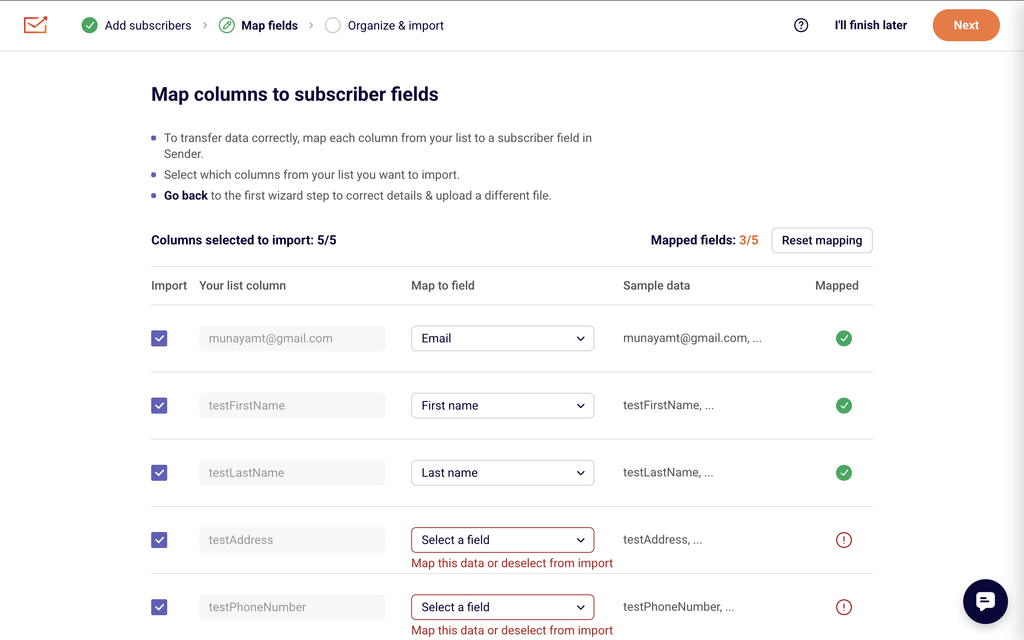
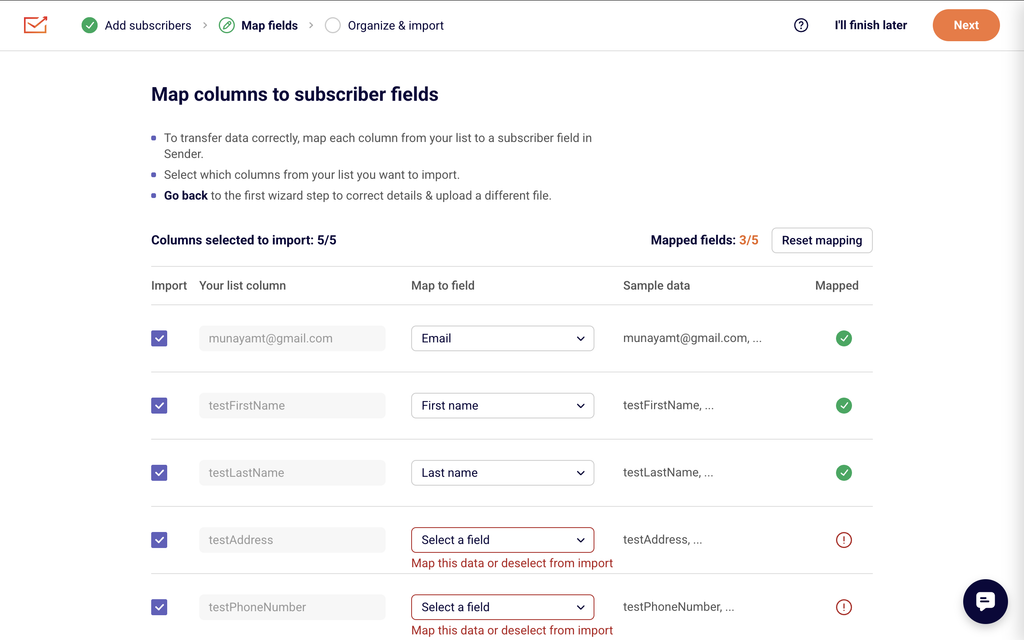
How do I map tags from my source platform to Sender? Export your subscriber list with tag data included as a column. In Sender, map tags to subscriber groups under Subscribers → Groups (if tags represent audience segments) or to custom fields under Subscribers → Fields (if tags represent individual attributes). Create the groups or fields in Sender before importing.
Will my automation performance history transfer? No. Automation analytics (open rates, click rates, completion rates) from your previous platform cannot be transferred. Performance tracking starts fresh in Sender from the first send of each recreated automation.
How do I handle conditional logic that Sender does not support? Document the original condition and identify the closest equivalent in Sender's Condition step types: Subscriber details, Subscriber status, Workflow email activity, Workflow SMS activity, Campaign activity, Group membership, or Segments. If no direct equivalent exists, consider splitting the automation into multiple workflows or using subscriber groups and custom fields to replicate the filtering logic.
Should I migrate all automations or only active ones? Start with active, high-priority automations — such as welcome sequences, cart abandonment, and re-engagement workflows. Migrate inactive or low-priority automations later, or use the opportunity to simplify and consolidate workflows.
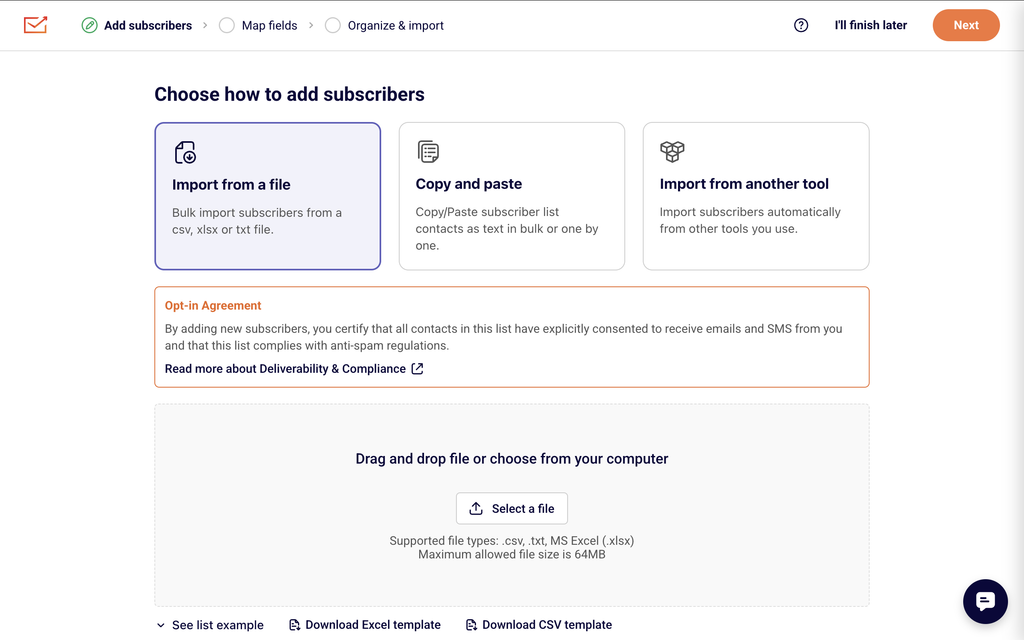
How do I import a suppression list with the correct statuses? Export unsubscribed and bounced contacts from your source platform as a separate file. In Sender, go to Subscribers → Import subscribers, upload the file, and set the Status column to Unsubscribed or the appropriate status during the field mapping step.
What trigger should I use if my source automation was based on a tag being applied? Sender does not have a tag-based trigger. Instead, map the tag to a subscriber group and use the Subscriber joins a group trigger. When subscribers are imported or added with that tag, assign them to the corresponding group to activate the automation.
Can I use Sender's automation templates instead of rebuilding from scratch? Yes. When you click Create new workflow, you can choose Create from template to start with a pre-built workflow such as Welcome, Abandoned cart recovery, or Win-back customers. If a template closely matches your source automation, use it as a starting point and modify the steps, content, and timing to match your original workflow.