It’s necessary to track and manage subscribers by their activity – its report can give you great insight into your subscribers’ behavior.
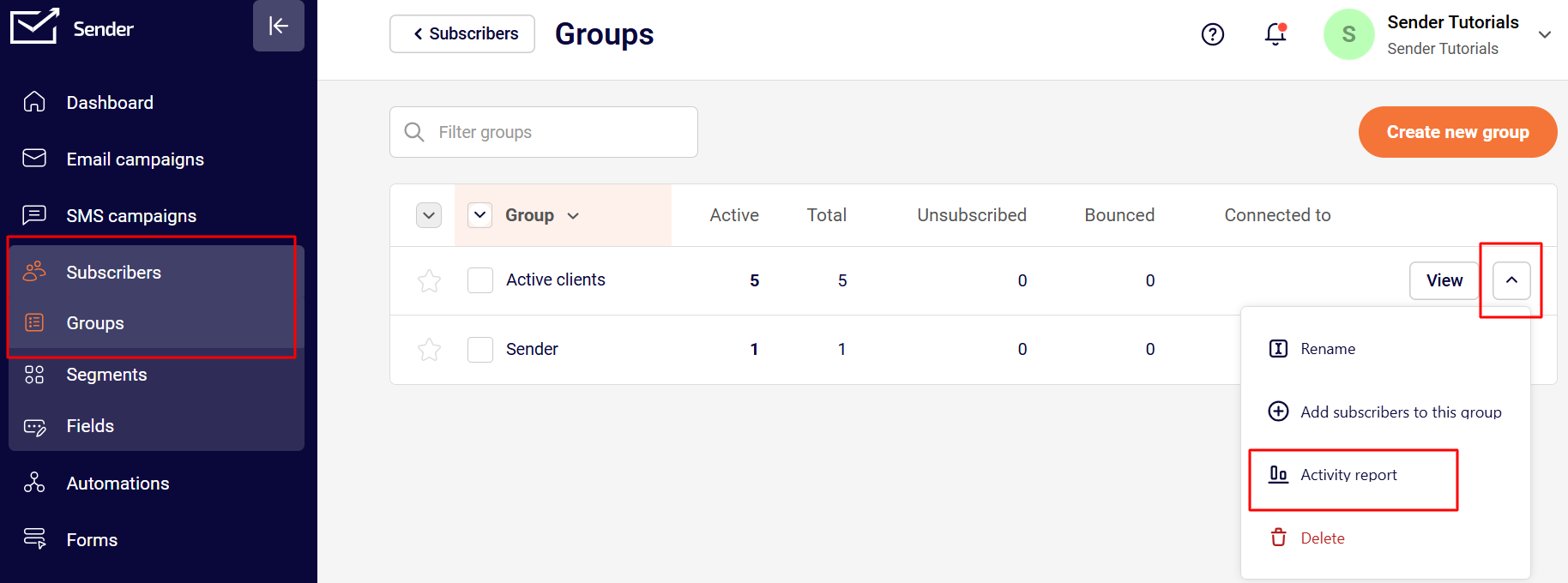
The process is relatively simple: go to the Subscribers’ section and click “Groups”.
Next, click on the arrow icon on the far right side of the screen next to the desired group, and select “Activity report.” At this point, the activity report will be generated and downloaded.
The information that will be found in the report:
Email address
Phone number
First name
Last name
Email status
SMS status
Emails sent
Emails opened
Emails clicked
If you got stuck on a specific task or can’t find a way to execute a particular job, contact our support team via LiveChat or [email protected] – we’re here to help 24/7.
Many factors are at play that determine whether or not your emails go into a recipient’s inbox or not.
The key ones include:
Sender reputation: This is one of the most significant factors impacting deliverability. Your sending email address, domain and sending IP address should be free from any previous email abuse or spamming history;
Email content quality: Your email content should be relevant to the recipient and spam-free. E.g., excessive use of capital letters, inclusion of spam words, exclamation marks, and other spammy tactics are a strict no-no that may trigger spam filters;
List quality: You should only ever be sending to opted-in subscribers who’ve expressed interest in receiving your emails. Cleaning up inactive (dead) subscribers and using best practices like double opt-ins is a must;
Use of security mechanisms: When you set up secure emailing settings such as SPF and DKIM, it signals that you are a genuine business that is what it claims to be. You can learn more about DKIM/SPF records by clicking here.
Engagement: Your open, click-through, reply, unsubscribe and report spam rates are all closely monitored by ISPs to determine your audience’s experience. More opens, clicks and replies tell them that they are finding your content valuable, therefore, more chances of your emails getting delivered to inboxes;
Optimizations: Not optimizing your email for viewing over mobile or with popular email clients can result in lower engagement and poorer engagement metrics;
Internal firewall issues: Sometimes, especially with corporate and university filters, regular emails look suspicious and are blocked. Check the allow listing information (other providers refer to it as “whitelisting”). If that’s the case, you should alter inbox filtration settings and create an exception/whitelist sendersrv.com.
Others: spammy subject lines, sudden increase in sending frequency (or volume), excessive use of images and attachments, lack of segmentation, unclear unsubscribe links and more could also impact deliverability negatively.
That’s it!
If you got stuck on a specific task or can’t find a way to execute a particular job, contact our support team via LiveChat or [email protected] – we’re here to help 24/7.
We’re currently supporting payments via credit and debit cards such as Visa, Master Card, and PayPal – unfortunately, payments via American Express are not accepted.
If you want to pay via American Express, please get in touch with our support agents via LiveChat or [email protected].
That’s it!
If you got stuck on a specific task or can’t find a way to execute a particular job, contact our support team via LiveChat or [email protected] – we’re here to help 24/7.
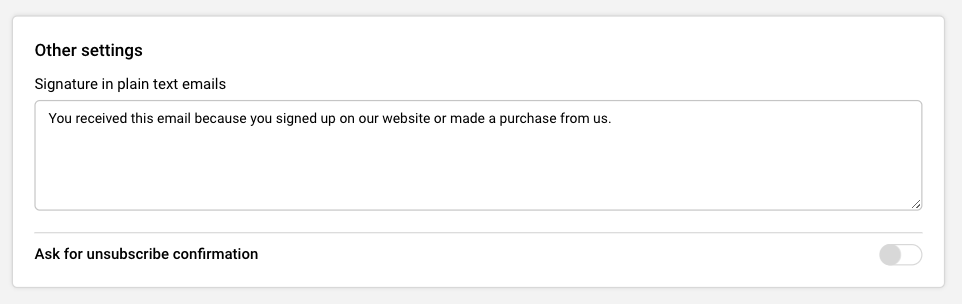
Yes, you can add a signature to a “plain text” newsletter. The signature is set in the main settings section “Account information.”
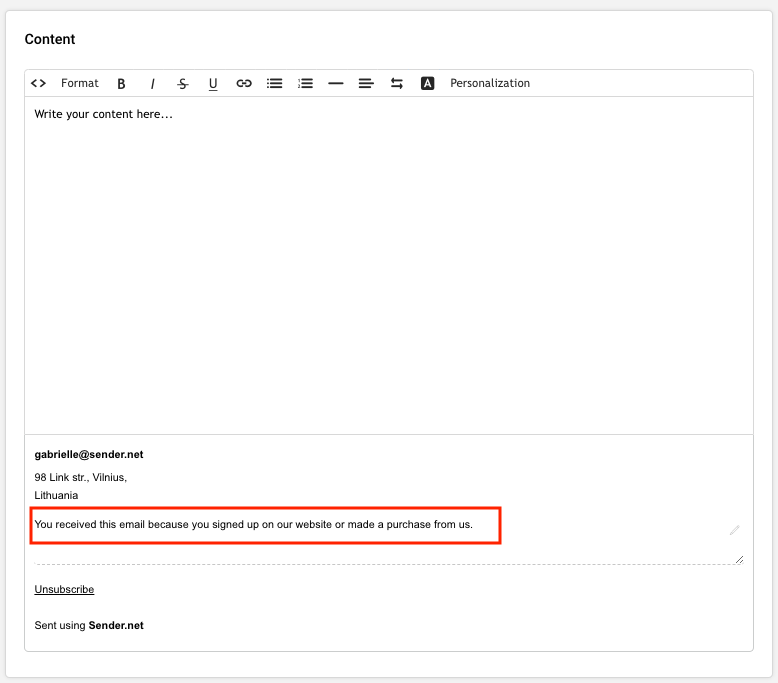
Here is how the signature transfers to “Plain text” editor – the signature can be changed in editor as well.
That’s it!
If you are stuck on a specific task or can’t find a way to execute a particular job, contact our support team via LiveChat or [email protected] – we’re here to help 24/7.
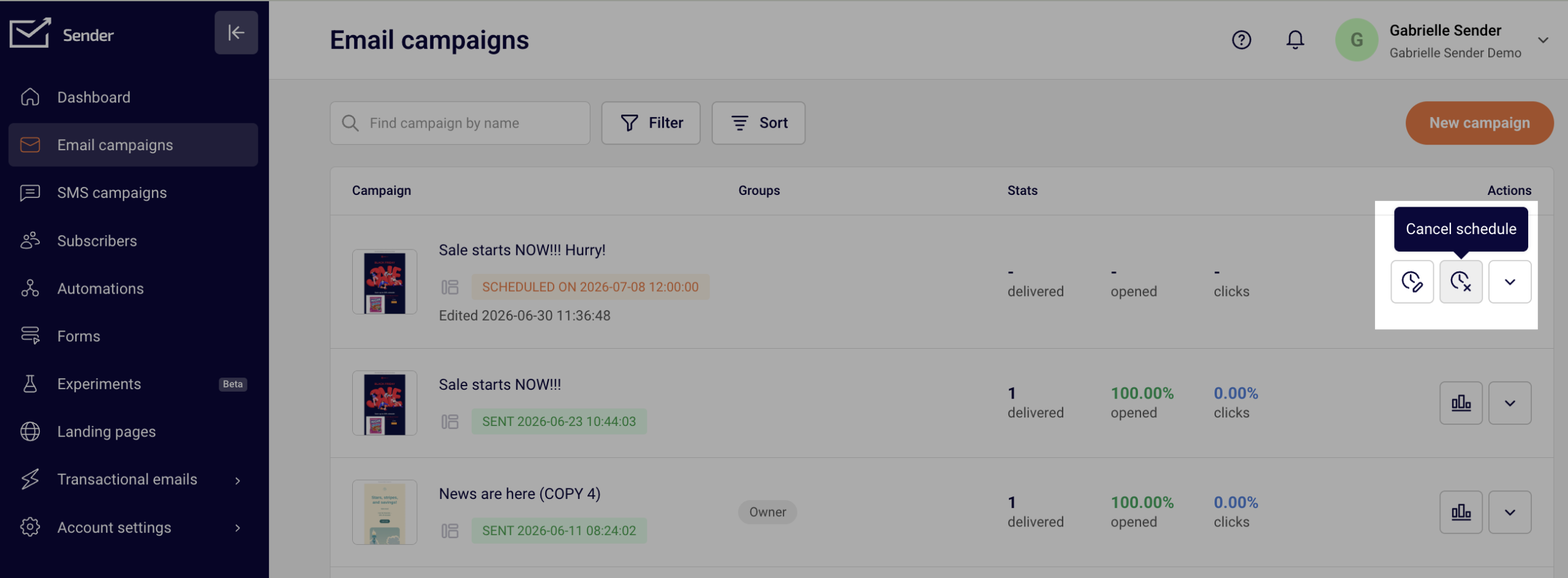
Unfortunately, it’s impossible to cancel a regular campaign after it has been sent – unless it’s a scheduled campaign. Scheduled campaigns can be canceled in a few clicks.
Open the Campaign section and hit the “Cancel schedule” button on the right side next to the campaign you want to cancel.
Once the scheduled campaign is canceled, it goes into “Draft” status and can be edited, rescheduled or deleted.
If you got stuck on a specific task or can’t find a way to execute a particular job, contact our support team via LiveChat or [email protected] – we’re here to help 24/7.
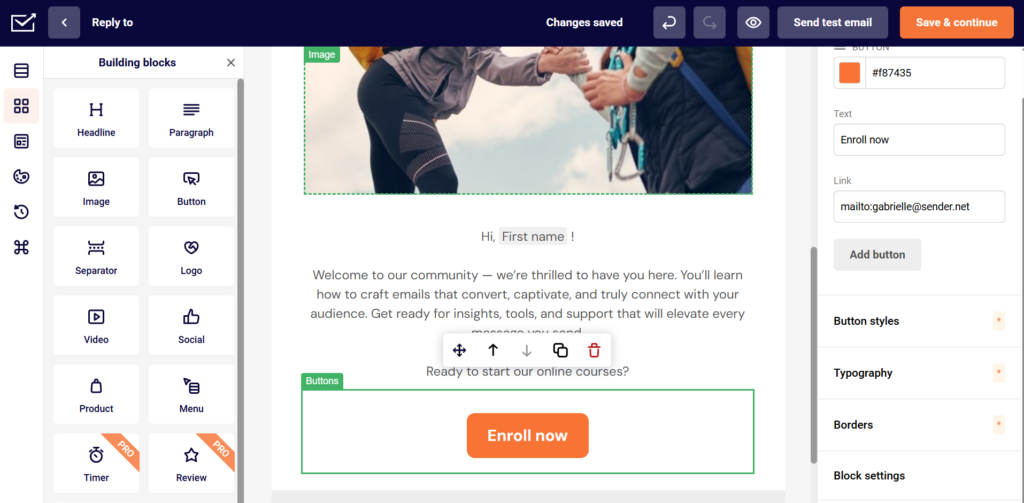
If you prioritize customer feedback, you should consider adding a visible reply-to button in the newsletter’s body. Creating a “reply” button is pretty simple. Firstly, you will need to drag the button element into the selected section.
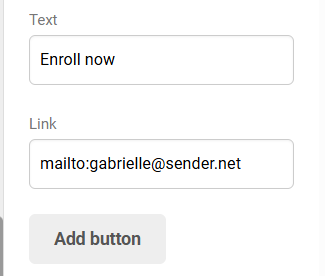
When that’s done – the button’s “link” section should have a shortcut:
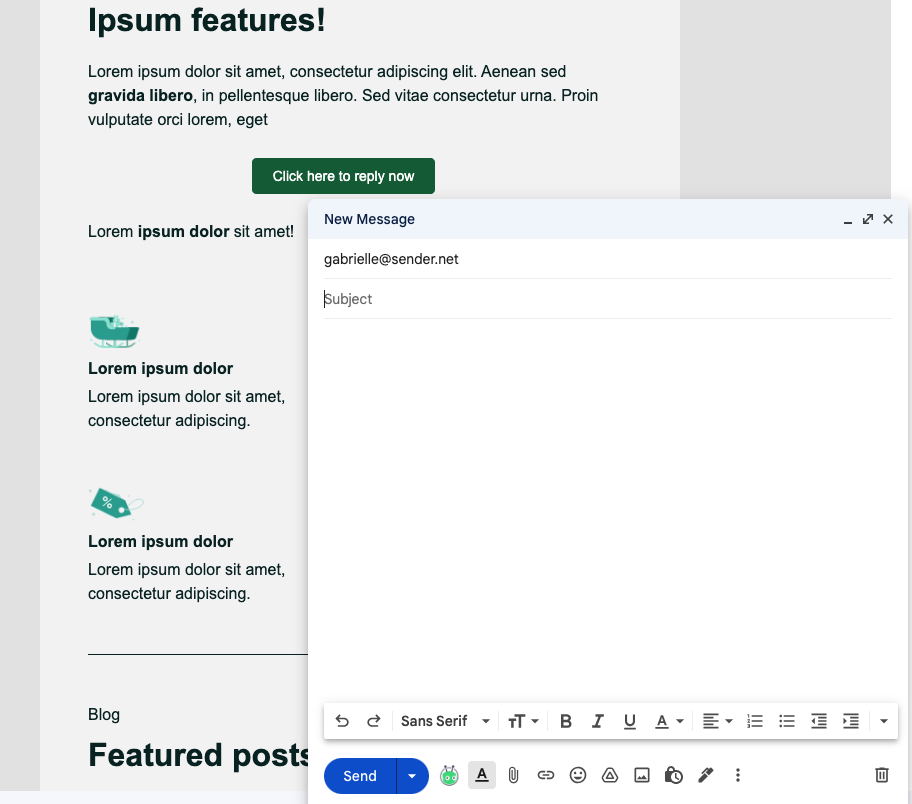
Now, when the recipient clicks the button, a draft with your email address (as the recipient) will appear.
Here’s how it looks in Gmail:
If you are stuck on a specific task or can’t find a way to execute a particular job, contact our support team via LiveChat or [email protected] – we’re here to help 24/7.
Go to Automations -> Create new workflow. An automated abandoned cart workflow can be created by choosing the “A cart is abandoned” trigger. Add a reasonable delay. Next, select the newsletter template called “Abandoned cart”. You can find it easily by clicking the “Ecommerce templates” tab. This template can be customized as needed – simply leave the abandoned cart section.
However, don’t forget to activate the workflow – otherwise, it won’t work. Click on the “Activate” button when you’re done.
Here’s how the whole process looks in motion:
Note: The abandoned cart trigger requires one of our native integrations with WooCommerce, Shopify, etc.
If you are stuck on a specific task or can’t find a way to execute a particular job, contact our support team via LiveChat or [email protected] – we’re here to help 24/7.
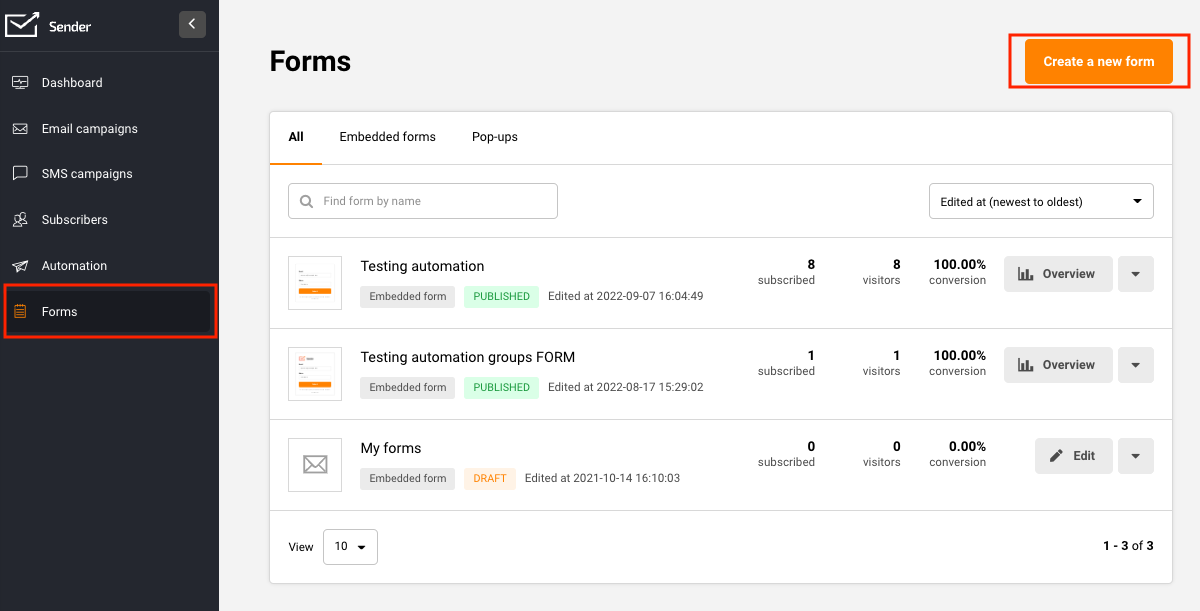
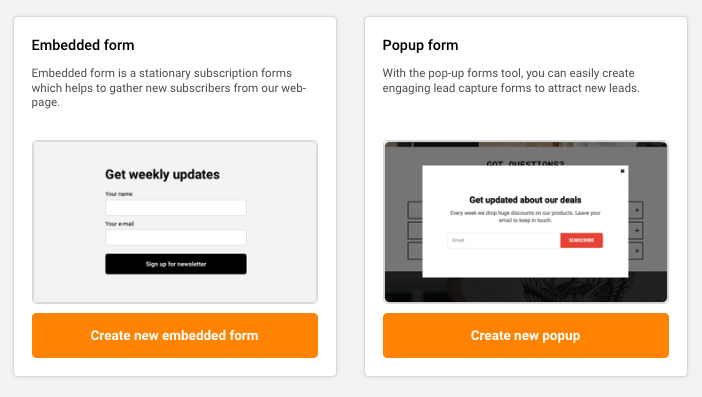
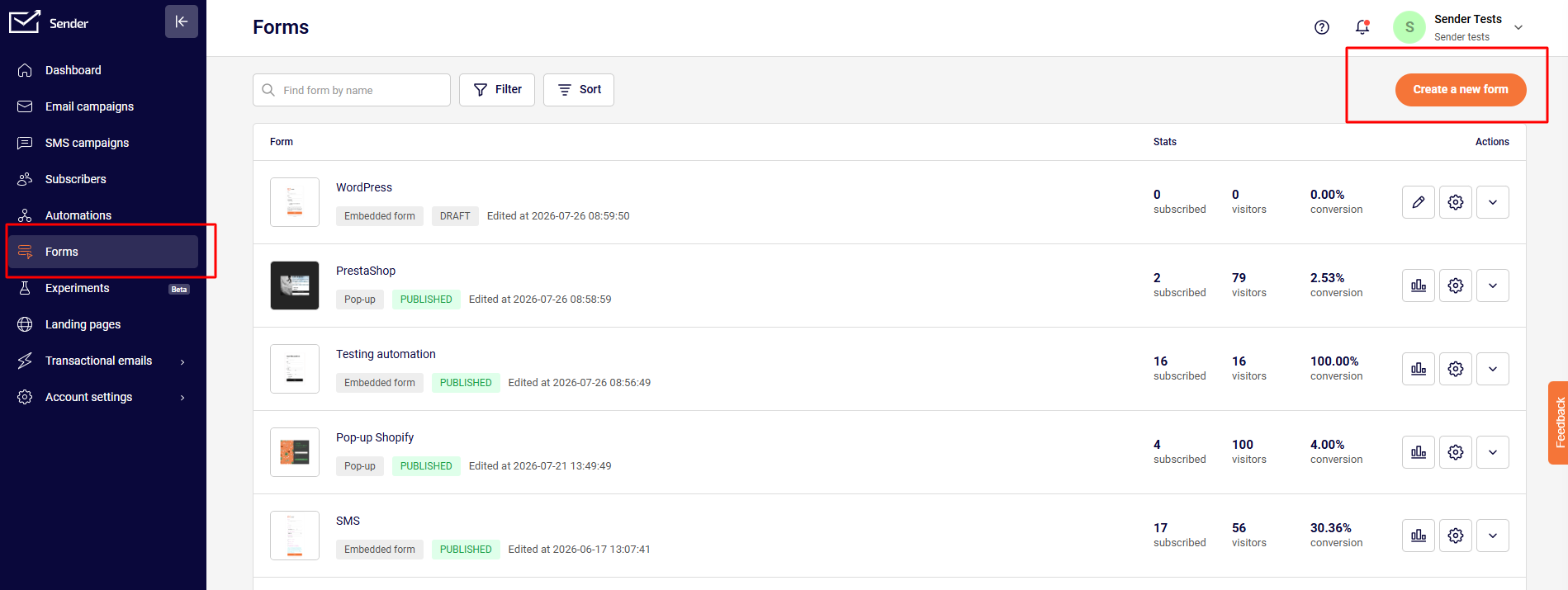
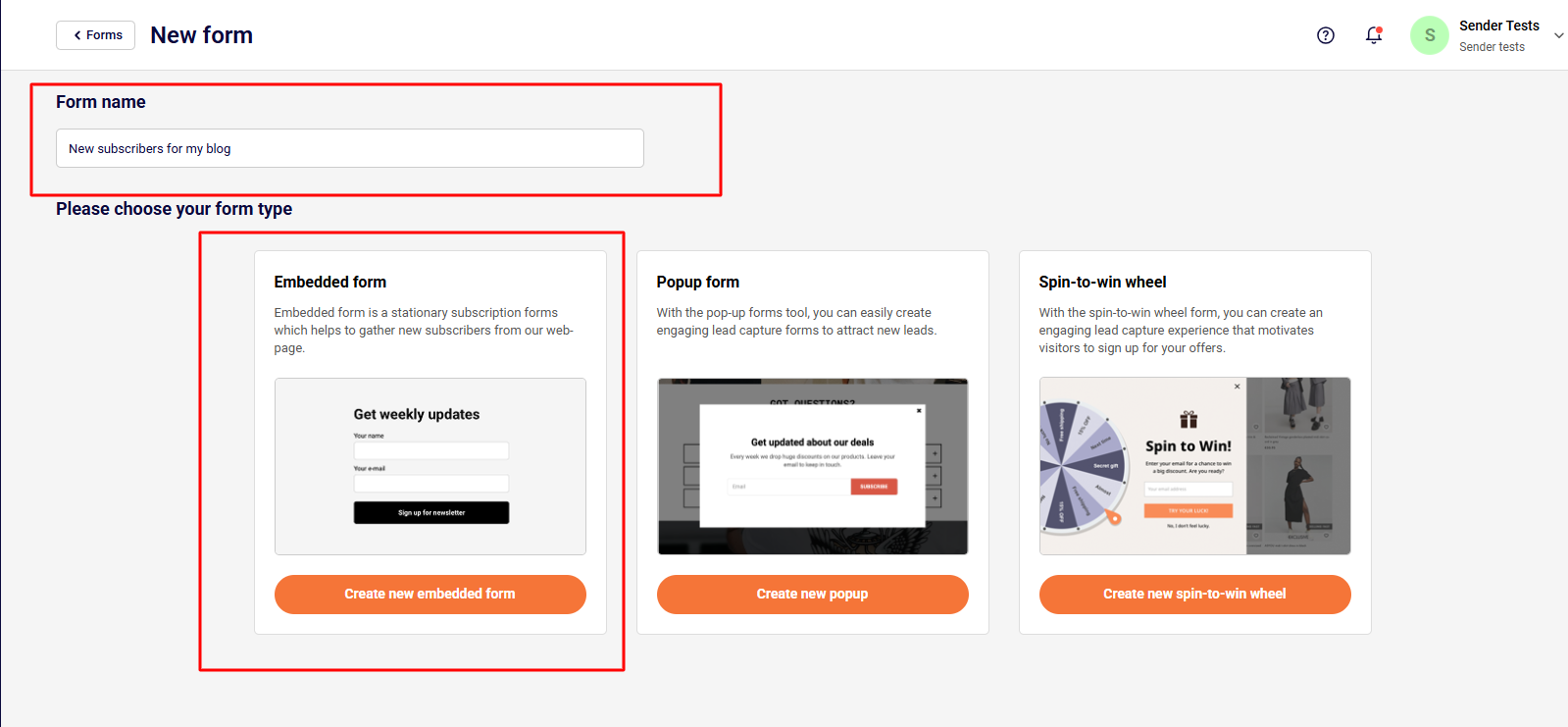
In order to create a popup form click “Forms” in the main menu bar. Then click “Create a new form” and you will be presented with different form options:
Embedded form
Popup form
In this case, choose the Popup form.
Popup forms
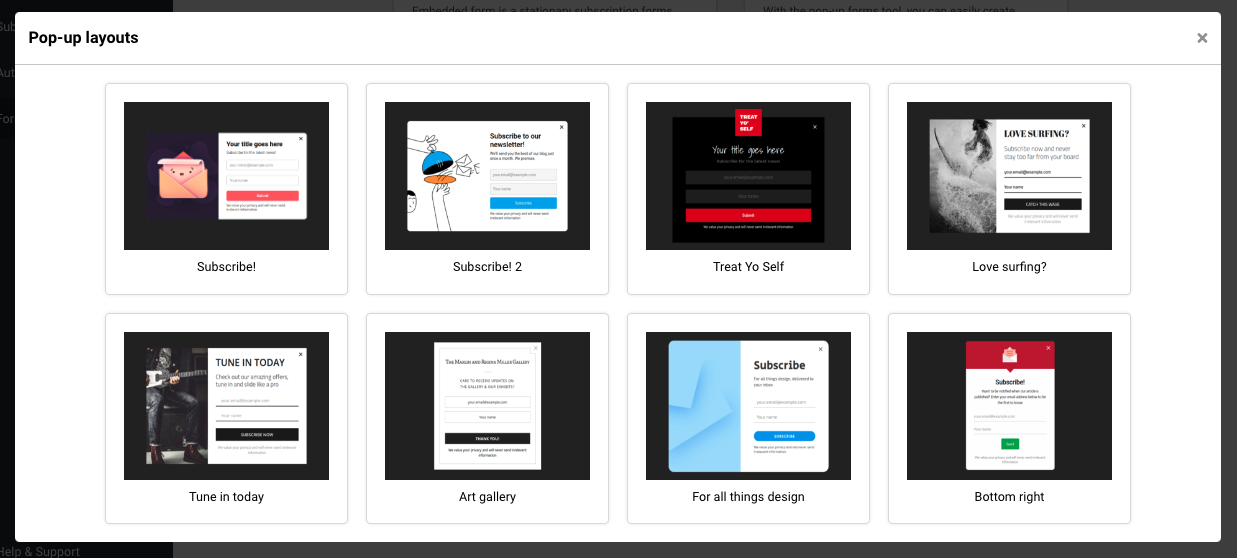
Creating a popup form is an easy process. Once you click on “Create new popup”, you will have a few templates to choose from. Pick one and click on it. You will have an option to change the layout at the design editor if you change your mind.
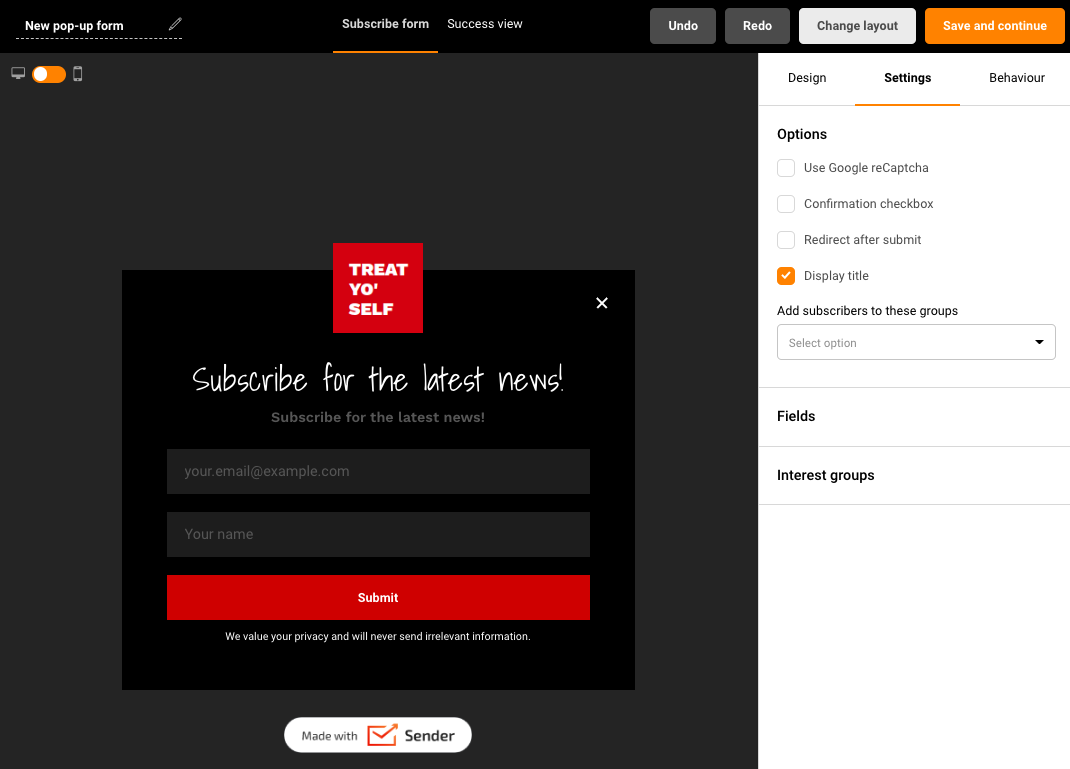
In this case, we picked “treat yo self” template – editing the popup form is practically the same process as creating an embedded form. It has the same design options and general settings. Click here for a tutorial on these options.
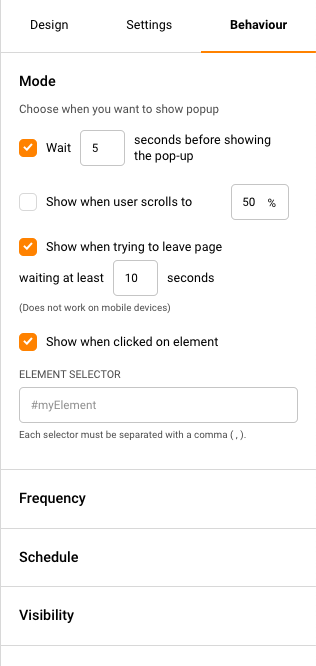
In the Behaviour section, you can set up when you want your pop-up to appear on your website.
Behavior settings lets you:
Set a timer when the popup will appear
Show form only when a user scrolls through a specific percentage of the page.
Enable the popup when a user is trying to leave the page.
Choose the popup to appear when a customer clicks on a particular web element.
Frequency:
Set the period when you want to show the popup to the same user again if he or she didn`t subscribe.
Schedule:
Set the timing of your pop-up in advance (set a particular date frame).
Visibility:
Set pages and/or devices on which to show the pop-up form.
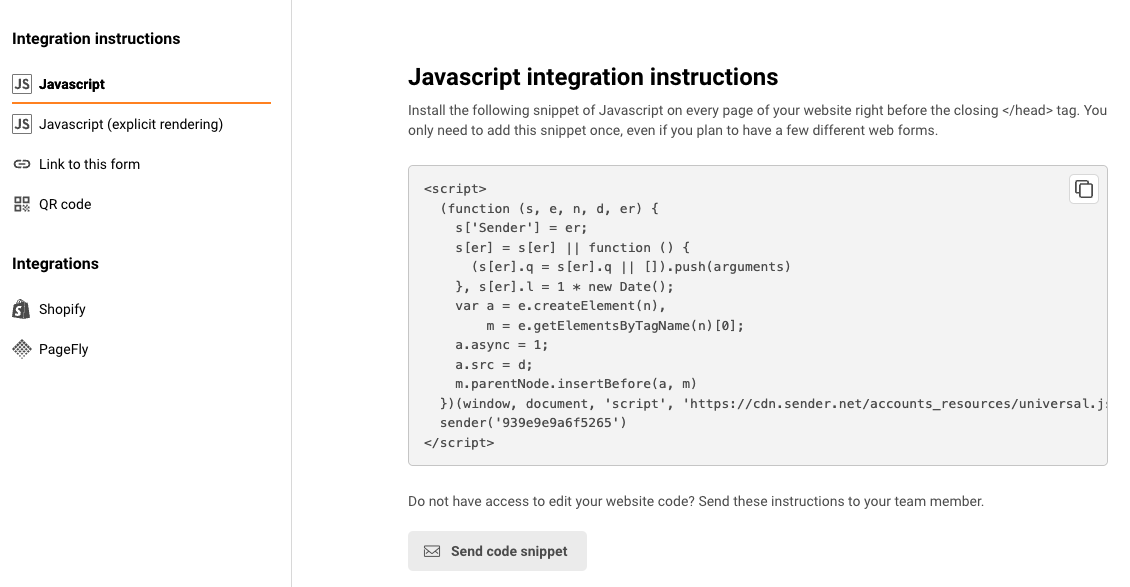
After the subscription form is fully designed – click the “Save and continue” button on the top right side. After that, you will be taken to the final tab. Here you will find the form’s script, which must be embedded into your web page.
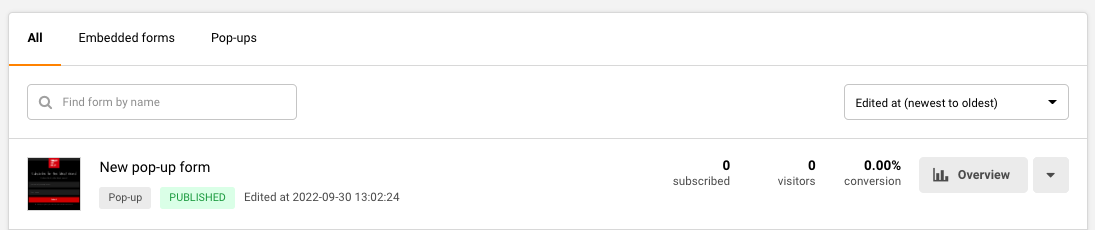
You can access the form’s activity panel by clicking on the “Overview” button in the “Forms” section.
Note – the form’s modifications will not change the script code. Therefore, you don’t need to re-implement the subscription form’s code after editing. Simply save the latest progress on our platform, and changes will be reflected on your web page.
WordPress website owners can implement popups using plugin integration. Click here to learn more.
That’s it!
If you are stuck on a specific task or can’t find a way to execute a particular job, contact our support team via LiveChat or [email protected] – we’re here to help 24/7.
In order to create a form, click ‘Forms’ in the main menu bar. Then click “Create a new form”. You will be presented with different form options:
Embedded form
Popup form
Spin-to-win wheel form
Name your form and click on “Create a new embedded form”.
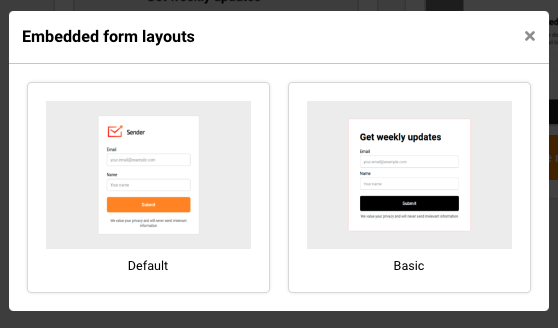
Choose between Default and Basic layout.
Embedded form
Creating an embedded form is a simple process. Firstly, you will need to set up the design. The subscription form is fully customizable – each element can be changed and modified according to your needs. Furthermore, the subscription form can include additional components such as reCAPTCHA for security, a confirmation checkbox for GDPR compliance, and other options.
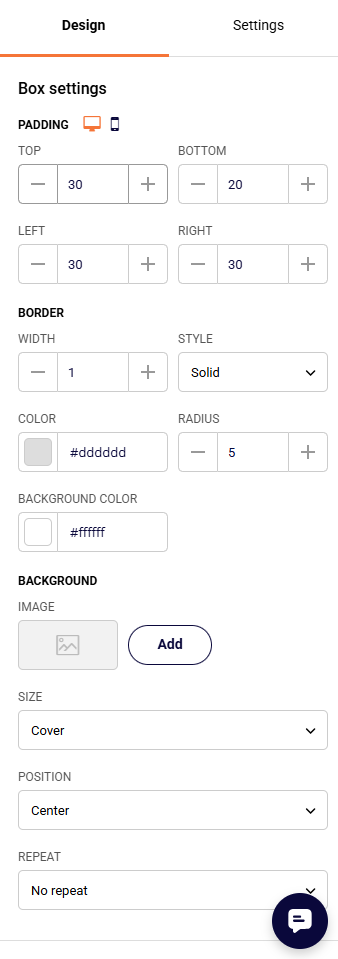
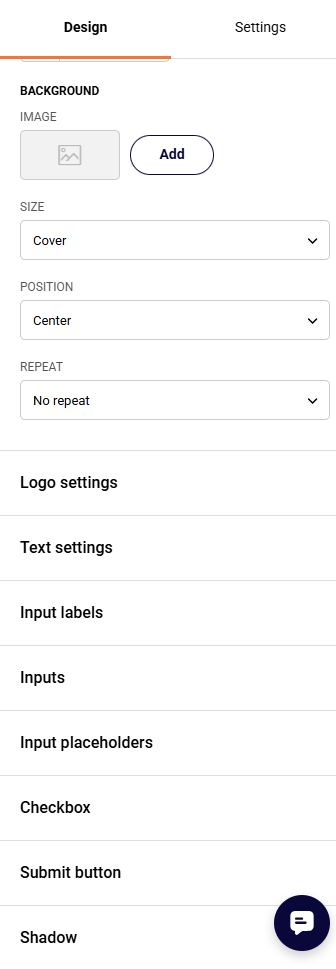
Design settings offer a variety of different options. Each element is completely customizable:
Box settings
Logo settings
Text settings
Input labels
Inputs (fields, e.g. name, surname)
Input placeholders
Checkbox
Submit button
Shadow
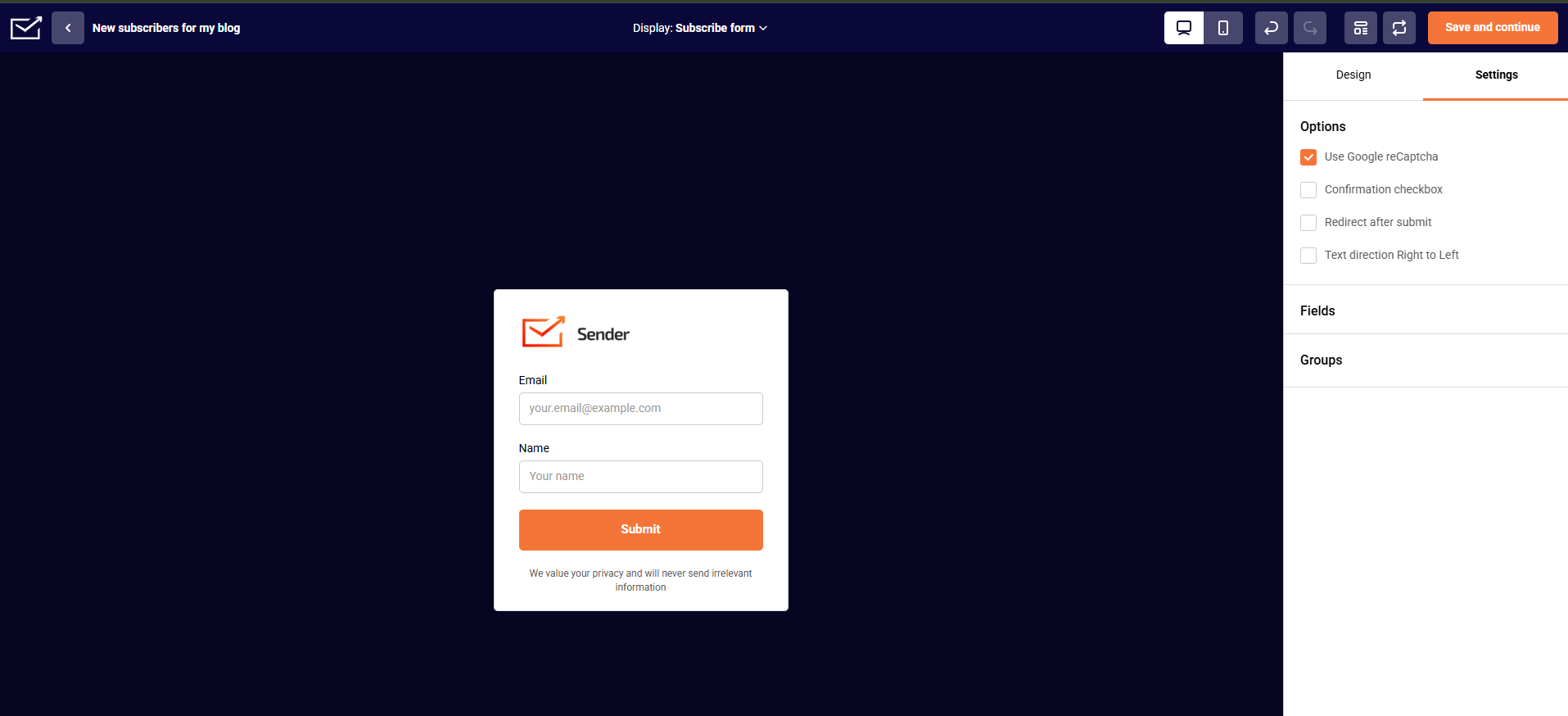
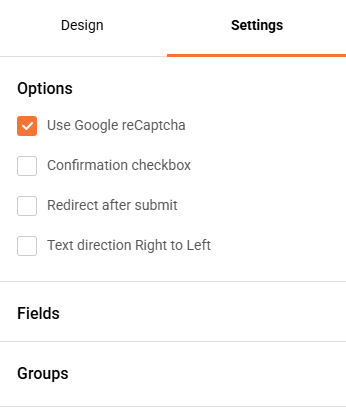
The Settings tab is responsible for additional form features, like:
ReCaptcha – Spam prevention.
Confirmation checkbox – usually used for GDPR compliance.
Redirection – custom redirection after subscription.
Text direction – change the direction of the text.
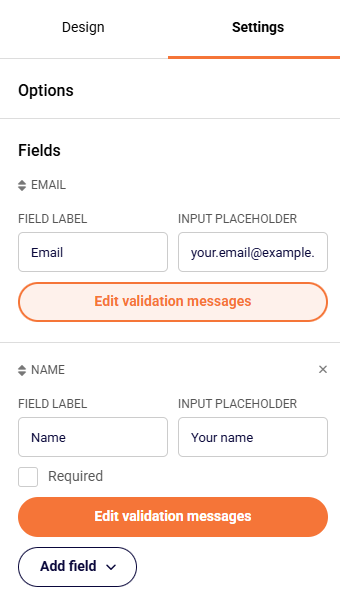
The fields section is used for adding custom fields. These fields are imported from the general fields section (Subscribers -> Fields), although light edits can be done here.
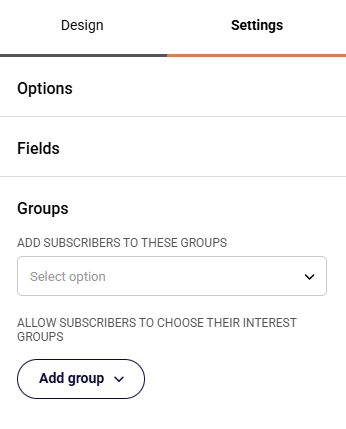
The groups section lets you decide which group(s) your subscribers will be added to once they submit the form.
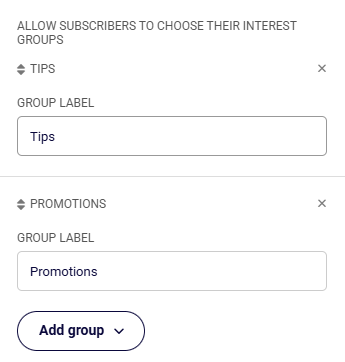
The “Add group” button is for interest groups. It allows subscribers to choose the type of content they are interested in. They can do so by ticking a box in the form.
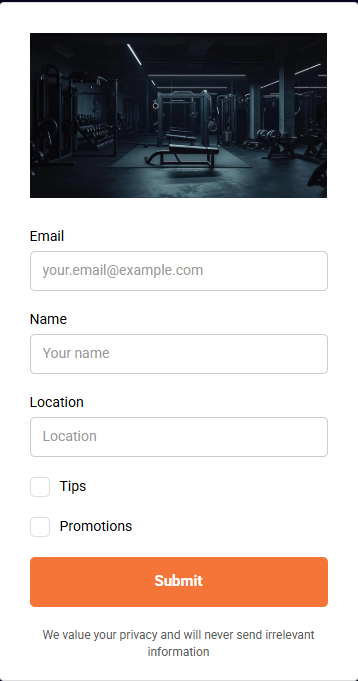
In the image below, you will see what the basic subscription form with a few additional changes looks like.
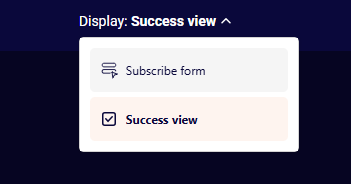
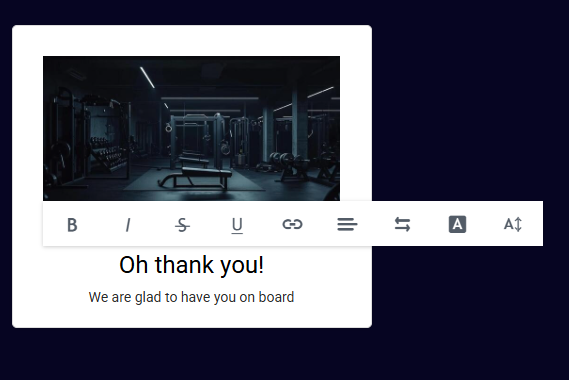
Furthermore, the thank-you page can also be customized. Click on the “Success view” button at the top and start editing text by clicking on it. This banner will be shown to new subscribers after they submit their information.
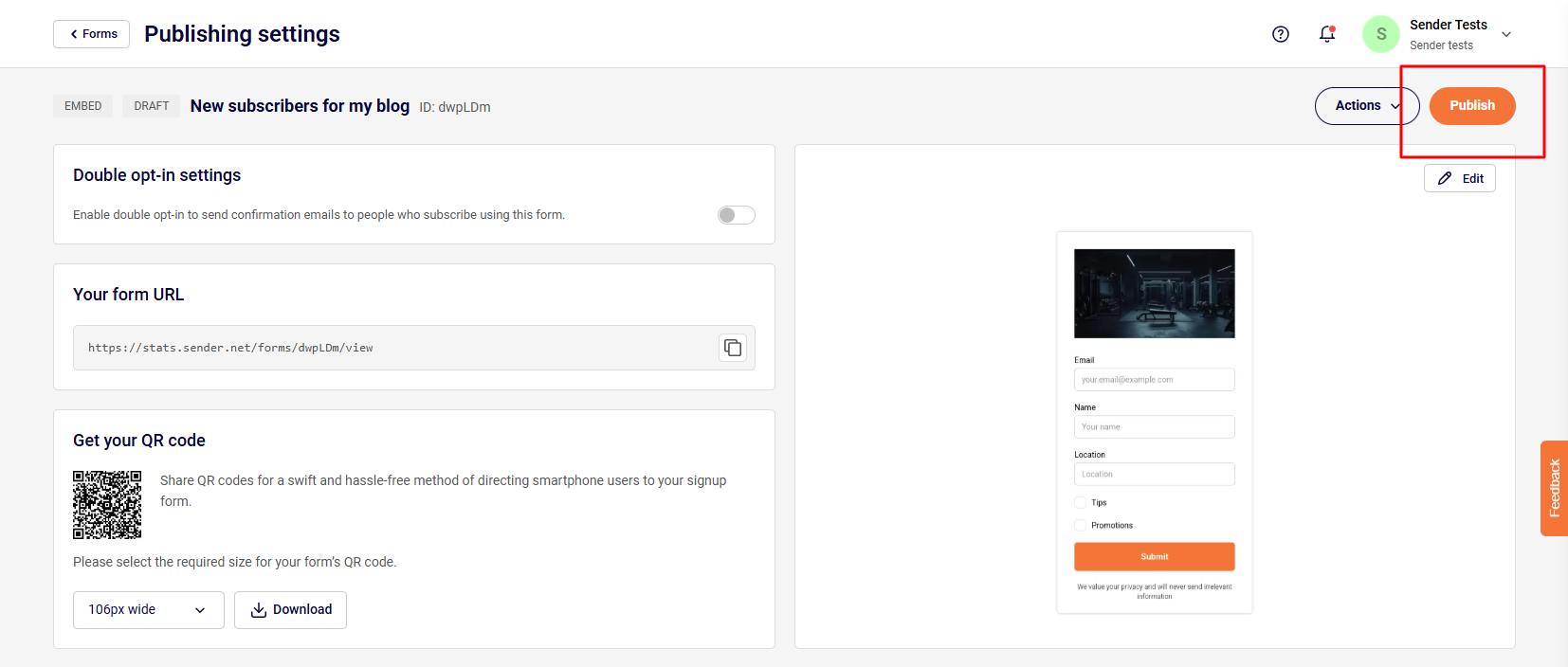
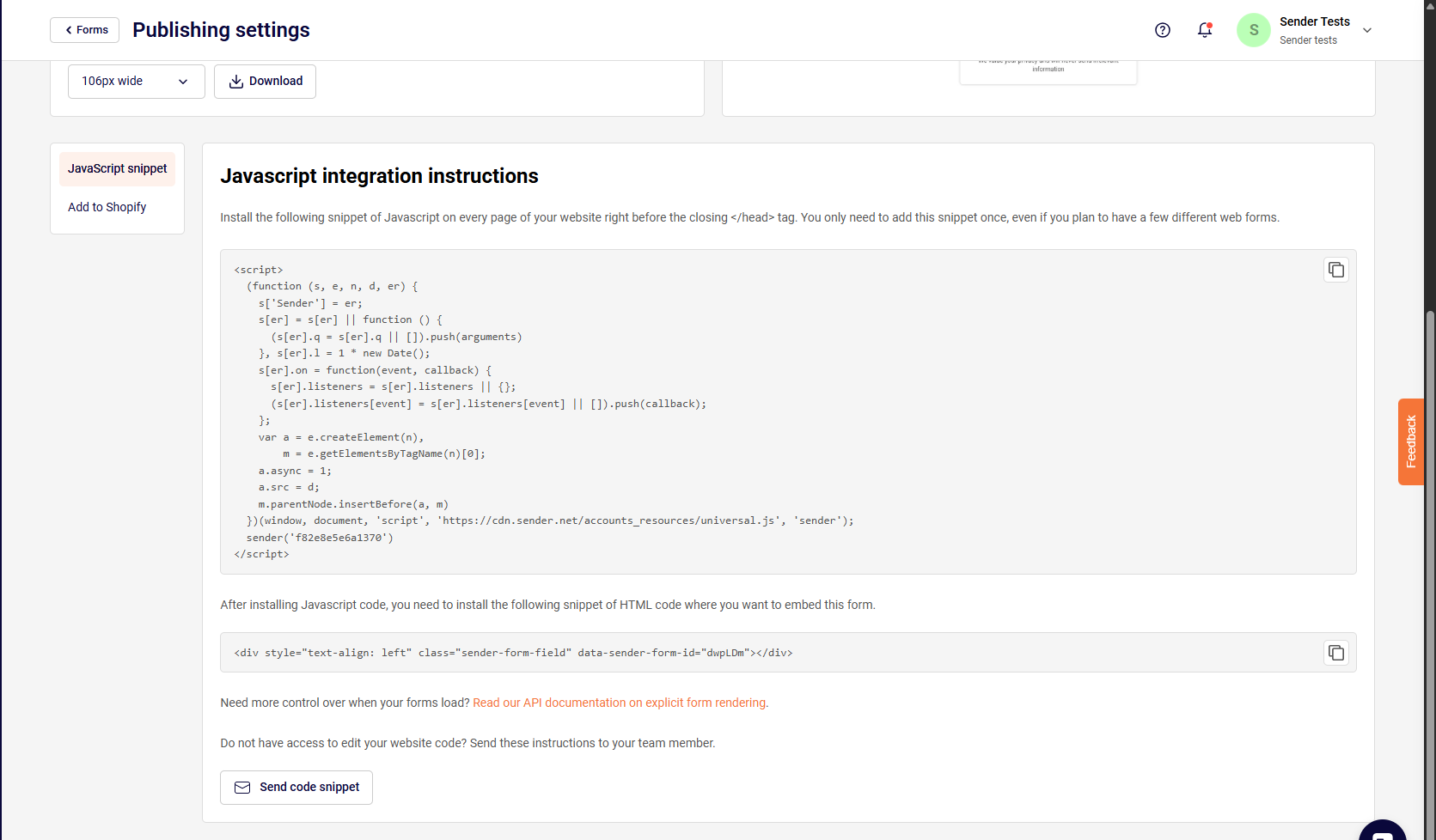
After the subscription form is fully designed, click the “Save and continue” button at the top right side. After that, you will reach the final tab. Make sure to publish the form so it can be viewed. There you will also find the form’s script (the embedded forms have two script parts), which must be embedded into your web page.
The activity window can be accessed by clicking on the “Overview” button in the forms section.
Note – you don’t need to re-implement the subscription form after any modifications are applied. It will be automatically updated after being saved.
WordPress website owners can implement subscription forms and popups using our plugin integration. Click here to learn more.
That’s it!
If you are stuck on a specific task or can’t find a way to execute a particular job, contact our support team via LiveChat or [email protected] – we’re here to help 24/7.
Every workflow in Sender starts with one trigger and then moves each subscriber through the steps you add below it. This guide shows you how to build one from scratch, using a welcome workflow as the example.
You’ll set up a trigger, add a welcome email, then extend the workflow with a delay, a condition and an action that sorts engaged subscribers into their own group. New to automations? Read Creating Your First Automation for a quick overview first.
How a workflow is built
A workflow has two parts: the trigger that lets subscribers in, and the steps they move through in order. When a subscriber completes one step, they continue to the next.
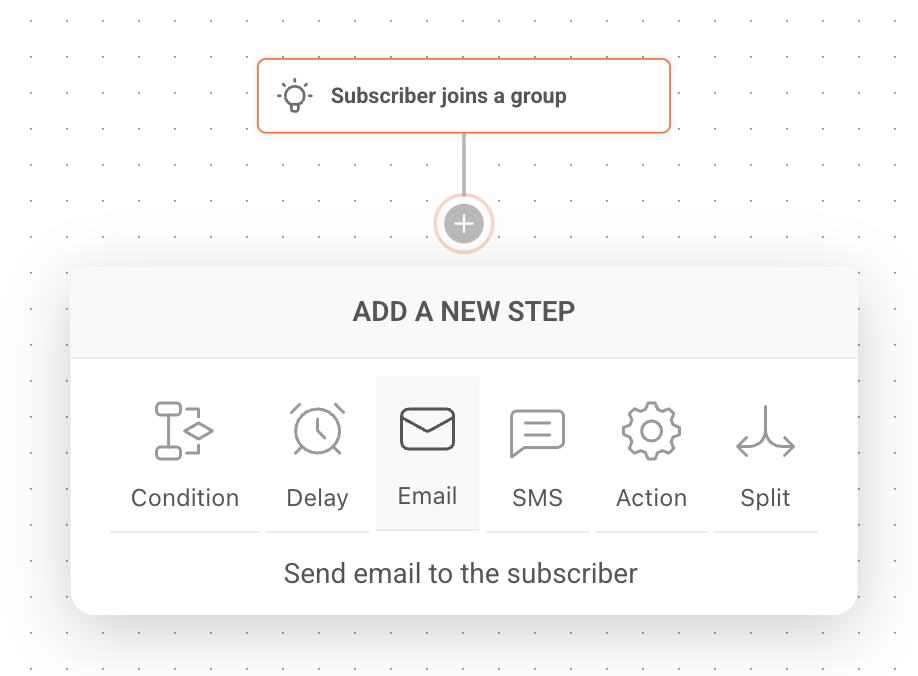
You can add six types of steps:
Email – sends an email to the subscriber. You create each workflow email inside the workflow itself.
SMS – sends a text message.
Delay – waits a set amount of time before the next step.
Condition – splits the workflow into Yes and No paths based on subscriber data or activity.
Action – changes group membership or subscriber fields, notifies you, or sends a webhook.
Split – A/B tests two email variations to see which performs better.
Have these ready so you can finish the workflow in one sitting:
A subscriber group for new signups. The trigger watches this group. See Subscribers & Segmentation to create one.
A way for people to join it, such as a signup form connected to that group. See Signup forms & popups.
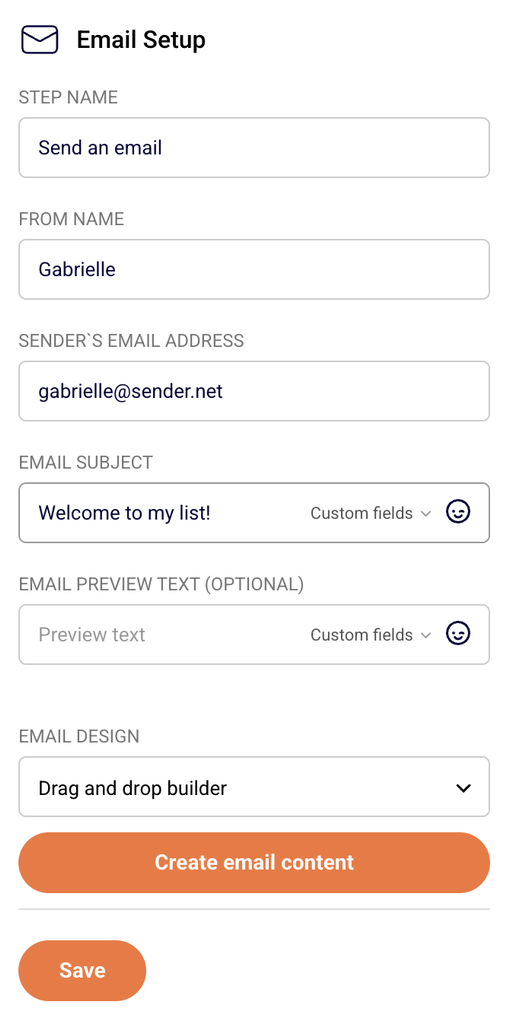
A sender name and email address. Replies to your welcome email go to this address.
Where to find this feature
In the Sender dashboard, click Automations in the left sidebar.
Steps to build your workflow
Step 1 — Start a new workflow from scratch
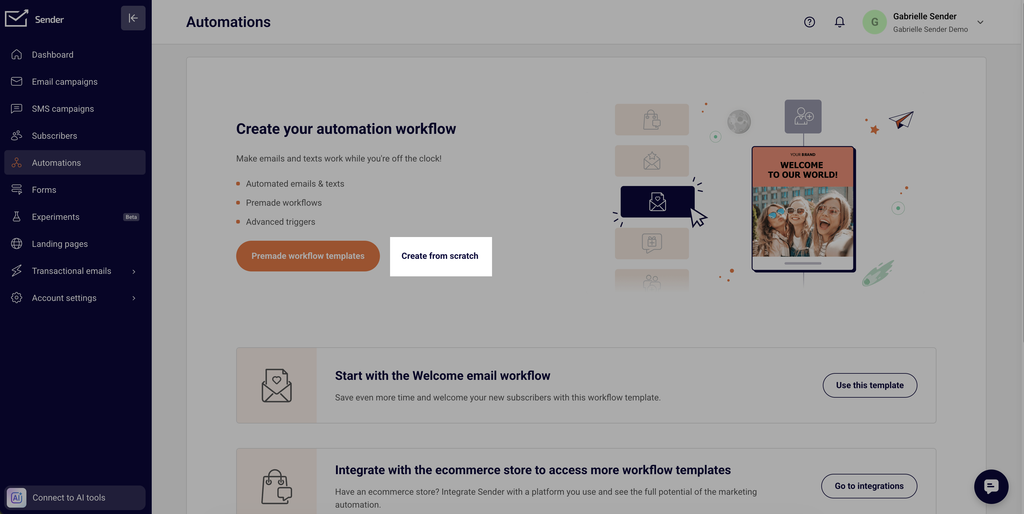
On the Automations page, click Create new workflow in the top right corner.
In the window that opens, select Create from scratch.
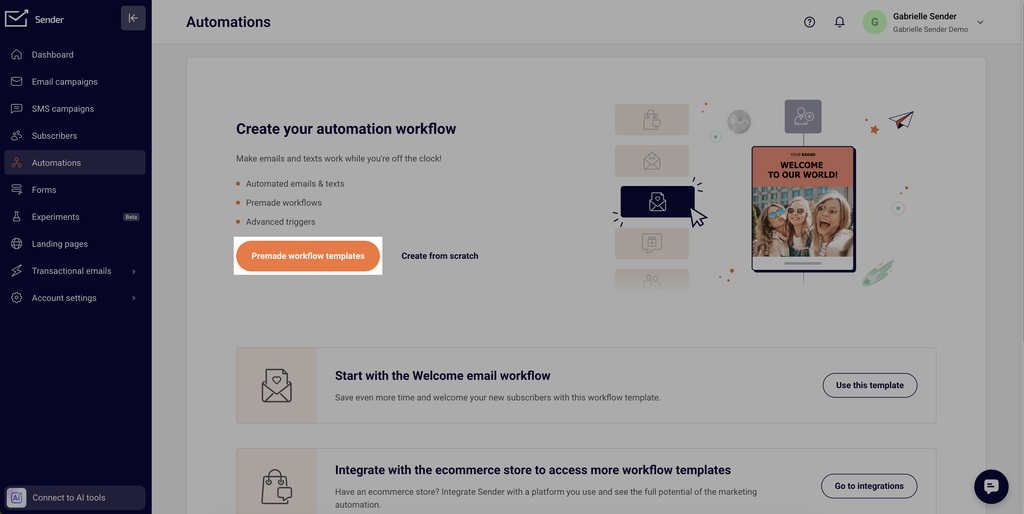
Want a head start instead? The same window offers ready-made templates grouped by goal, such as Welcome, Onboarding and Win-back customers. This guide builds from scratch so you see every step.
Step 2 — Choose a trigger and name the workflow
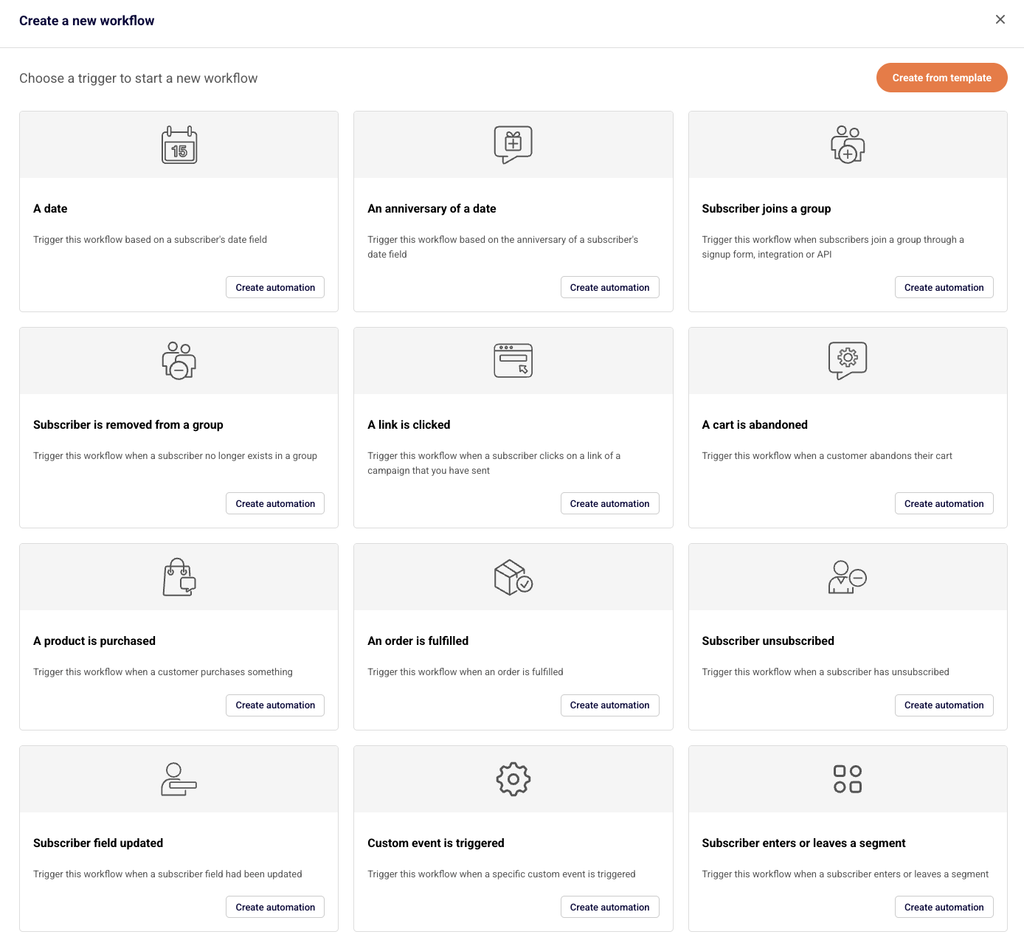
The next screen lists every available trigger. For a welcome workflow, you want subscribers to enter the moment they sign up.
Find Subscriber joins a group and click Create automation on it.
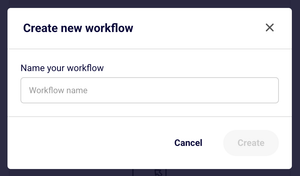
In the popup, enter a name you’ll recognize later, such as “Welcome – Newsletter signups”.
Click Create. The visual workflow builder opens.
Other triggers start workflows from dates, anniversaries, link clicks, unsubscribes, field updates, and ecommerce events like abandoned carts and purchases. See Choose a starting trigger for the full list.
Step 3 — Set up the trigger
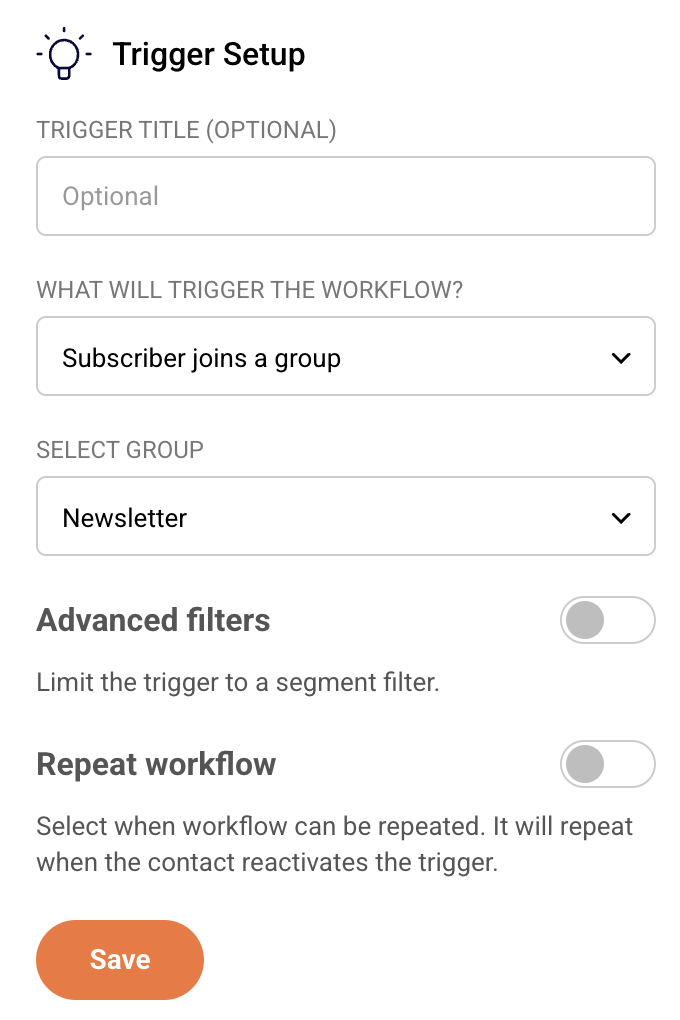
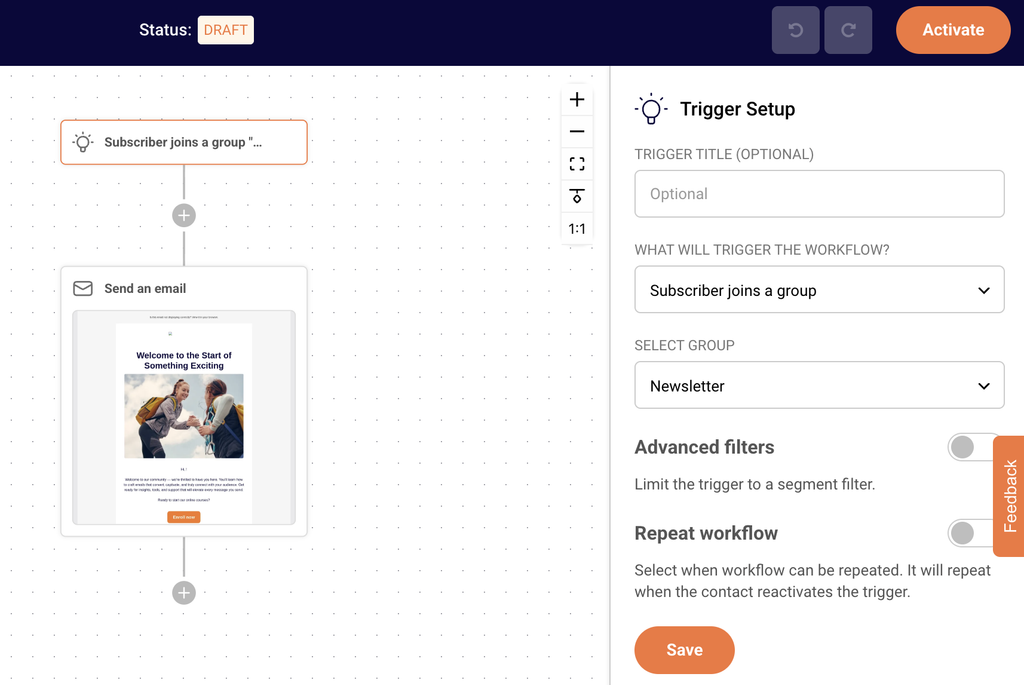
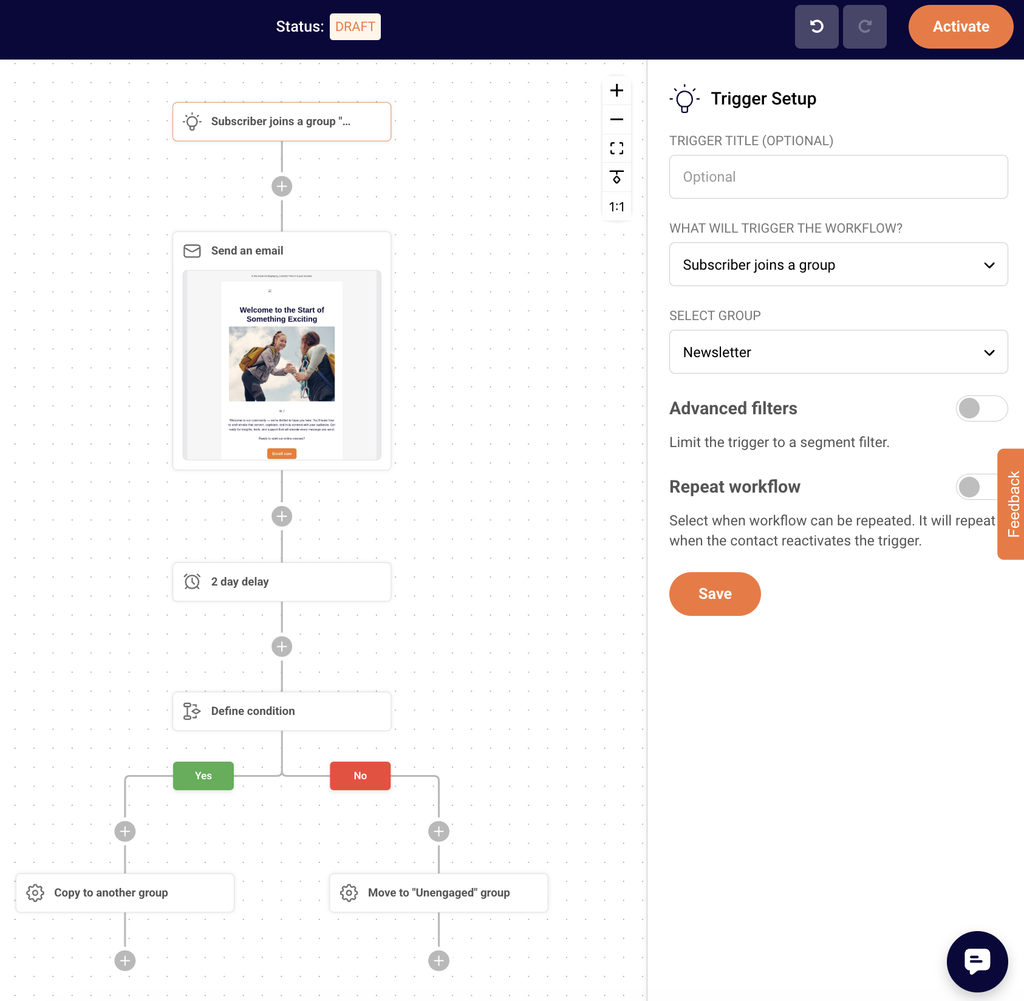
The builder shows your trigger block at the top of the canvas and the Trigger Setup panel on the right.
Open the SELECT GROUP dropdown and choose the group new subscribers join (for example, “Newsletter”).
Leave the Repeat workflow toggle off so each subscriber receives the welcome email only once. Turn it on only if people should re-enter every time they rejoin the group.
Click Save.
The trigger block updates to show your group, and the Completion counter in the top right moves forward.
You now have a working welcome workflow: a trigger and a finished email. You can jump to Step 7 and activate it, or keep building.
Step 6 — Extend the workflow (optional)
Add steps below the email to react to what subscribers do next. In this example, the workflow waits two days, checks whether the subscriber engaged with the welcome email, and copies engaged subscribers to a separate group.
Add a delay
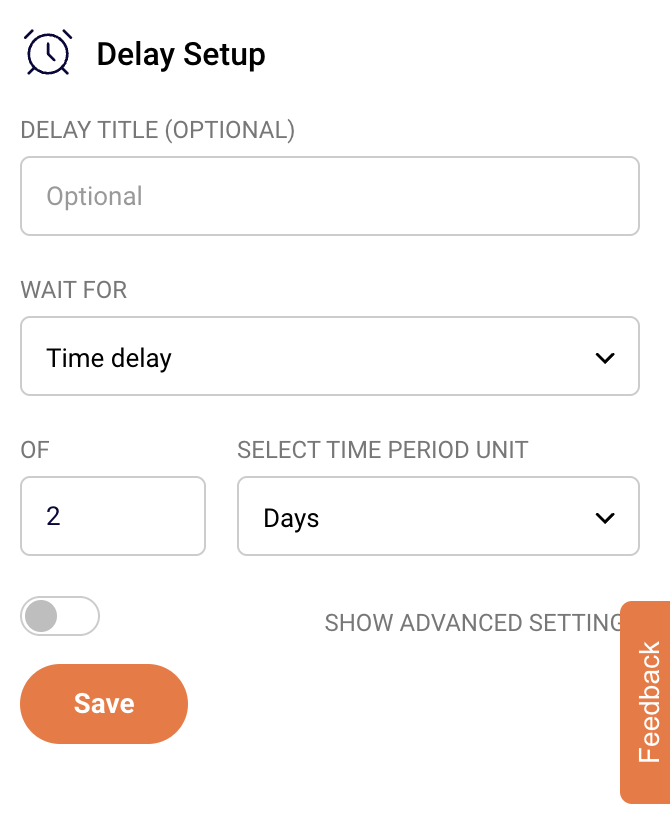
Click the + icon below the email step and select Delay.
In the WAIT FOR dropdown, keep Time delay.
Enter 2 in the OF field and choose Days from SELECT TIME PERIOD UNIT.
Click Save. The block on the canvas now reads “Wait 2 Days”.
Want the workflow to continue only on certain days or at a set time? Turn on SHOW ADVANCED SETTINGS and choose the days under RESUME FLOW ON and a TIME. See Delays & Timing Rules.
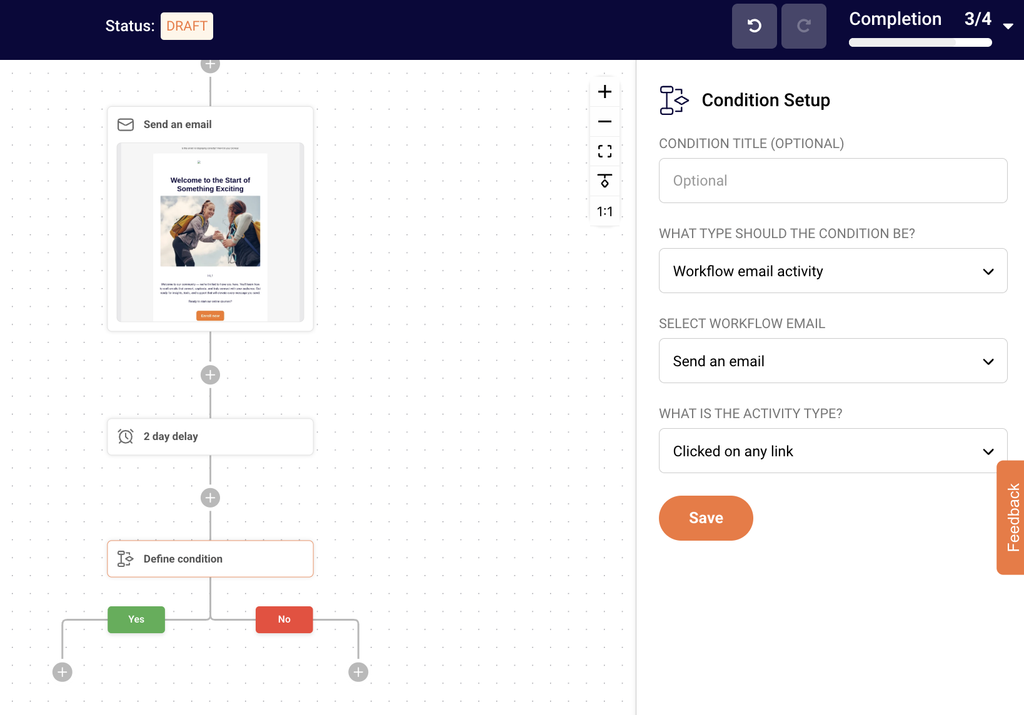
Add a condition
Click the + icon below the delay and select Condition.
In WHAT TYPE SHOULD THE CONDITION BE?, choose Workflow email activity.
Select your welcome email, so the condition checks whether the subscriber engaged with it.
Click Save. The block splits into a green Yes path and a red No path.
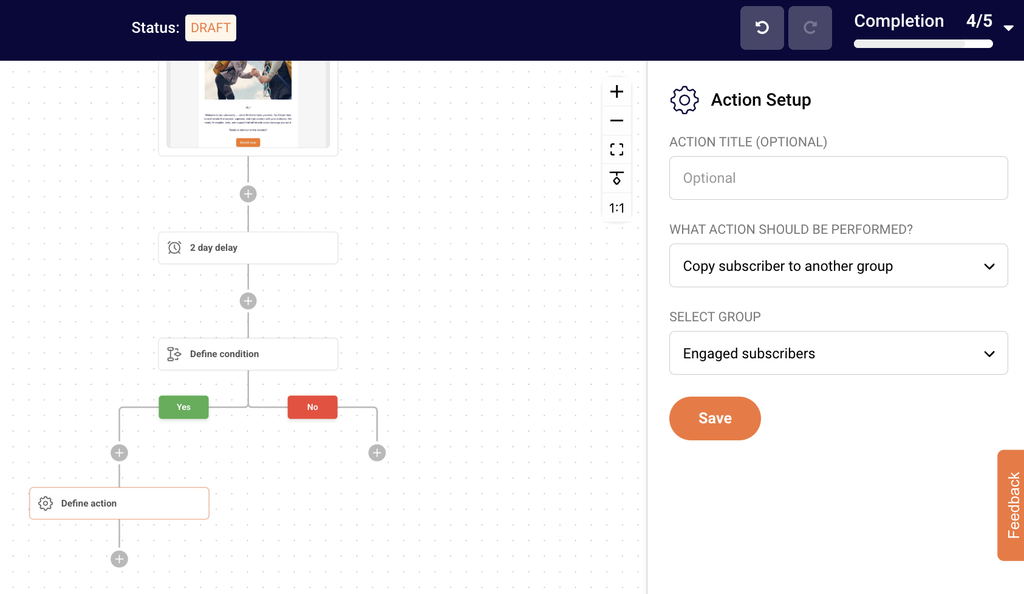
Choose Copy subscriber to another group, then pick the group, for example “Engaged subscribers”.
Click Save.
Choose Move subscriber to another group instead if the subscriber should leave their original group.
The No path is a good place for a follow-up. For example, add a second email with a different subject line for subscribers who missed the first one.
Step 7 — Review and activate
Check every block on the canvas. A block that reads Define delay or Define condition still needs saving.
Confirm the Completion indicator in the top right shows full progress.
Click Activate in the top right corner.
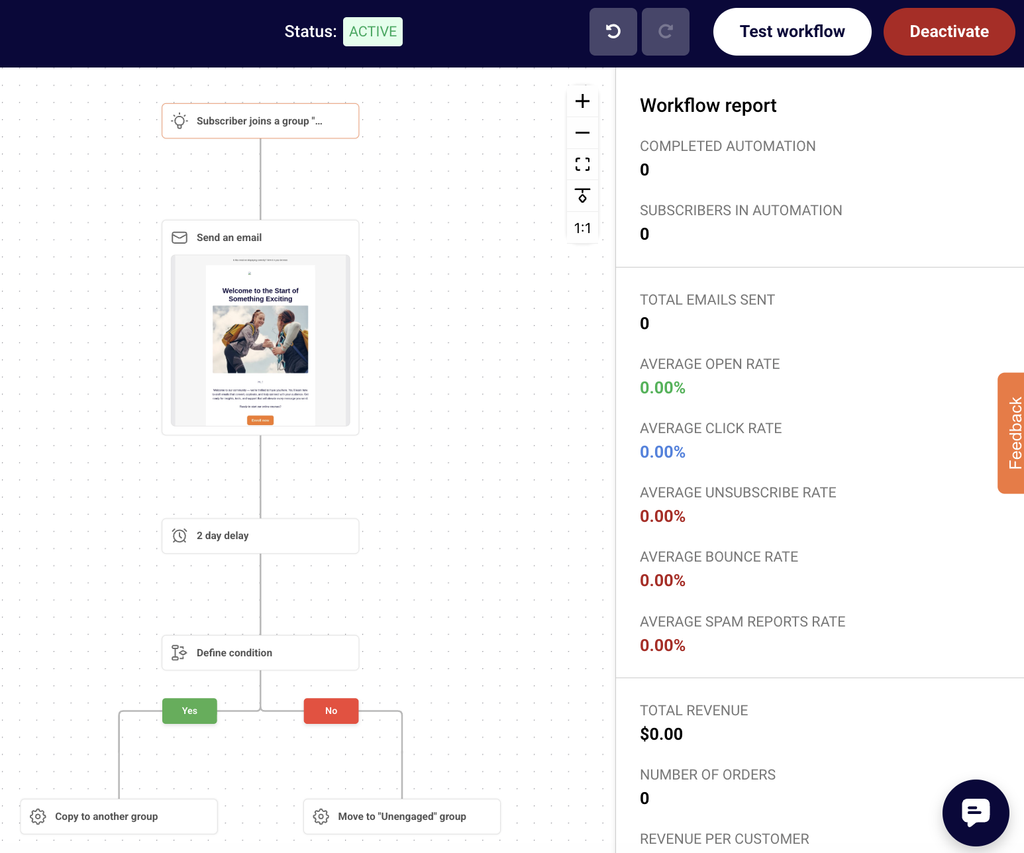
The workflow status changes from DRAFT to ACTIVE, and the workflow starts running for subscribers who match your trigger.
Example: a larger workflow
Once you’re comfortable with the basics, you can build much larger customer journeys. Chain several delays, stack conditions under each branch, mix email and SMS steps, and use actions to keep your groups tidy based on what subscribers do.
Common examples include win-back series for customers who haven’t bought in a while and abandoned cart reminders. Ecommerce triggers such as A cart is abandoned need an active ecommerce integration.
Your workflow appears in the Automations list with an ACTIVE badge. From then on, each subscriber who joins the trigger group enters the workflow and moves through the steps in order.
Once the workflow starts sending, you can track emails sent, open rate, click rate and revenue in the Email report panel or with the Full report button. See Automation Performance and Reports.
You can keep editing an active workflow. Changes apply to subscribers who reach those steps after you save. See Editing Live Automations.
Common issues
The workflow won’t activate → You need at least one email step with saved content, and every block must be configured. Look for blocks that still read “Define…” and check the Completion indicator.
The Save button is grayed out → Fill in every required field in the panel. Save becomes active once each dropdown and field has a value.
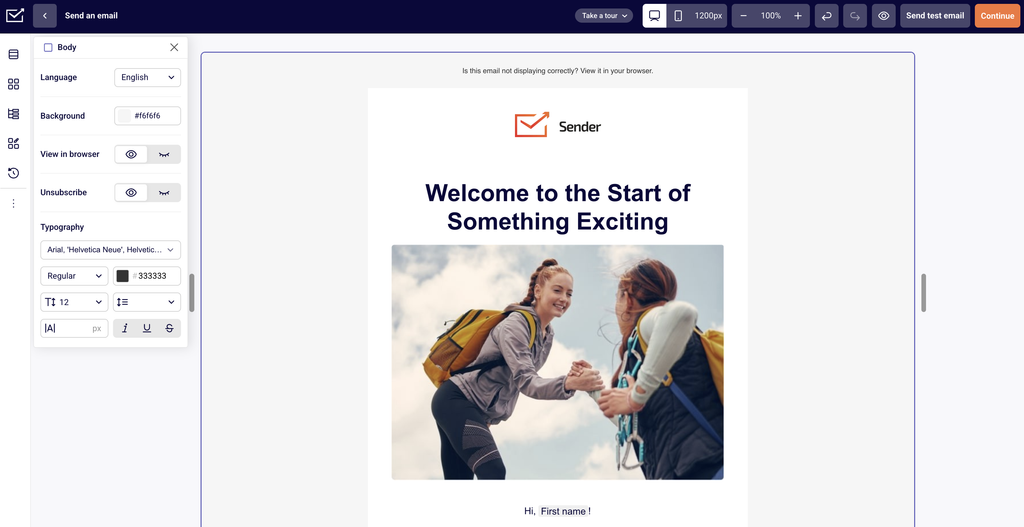
The email step shows as incomplete → Open the email editor, finish the design and click Save & continue.
Nobody is entering the workflow → Confirm the workflow status is ACTIVE, the right group is selected in the trigger, and new subscribers are actually joining that group, for example through a signup form connected to it.
Emails send at unexpected times → Workflows run on your account’s time zone, so check it in your account settings. If a delay uses advanced settings, check the days under RESUME FLOW ON and the TIME.
FAQs
Can a workflow have more than one trigger? No. Each workflow has a single trigger. To respond to several events, create a separate workflow for each.
Can a subscriber go through the same workflow twice? Only if you turn on Repeat workflow in the trigger settings. With it off, each subscriber enters once.
How do I pause a workflow? Click Deactivate in the top right of the workflow builder. Subscribers already in the workflow finish their sequence. See Pausing and Resuming Automations.
Can I start from a template instead? Yes. After you click Create new workflow, pick a template from categories such as Welcome, Onboarding or Win-back customers, then adjust its steps.
If you get stuck on a specific task or can’t find a way to do something, contact our support team via LiveChat or [email protected]. We’re here to help 24/7.